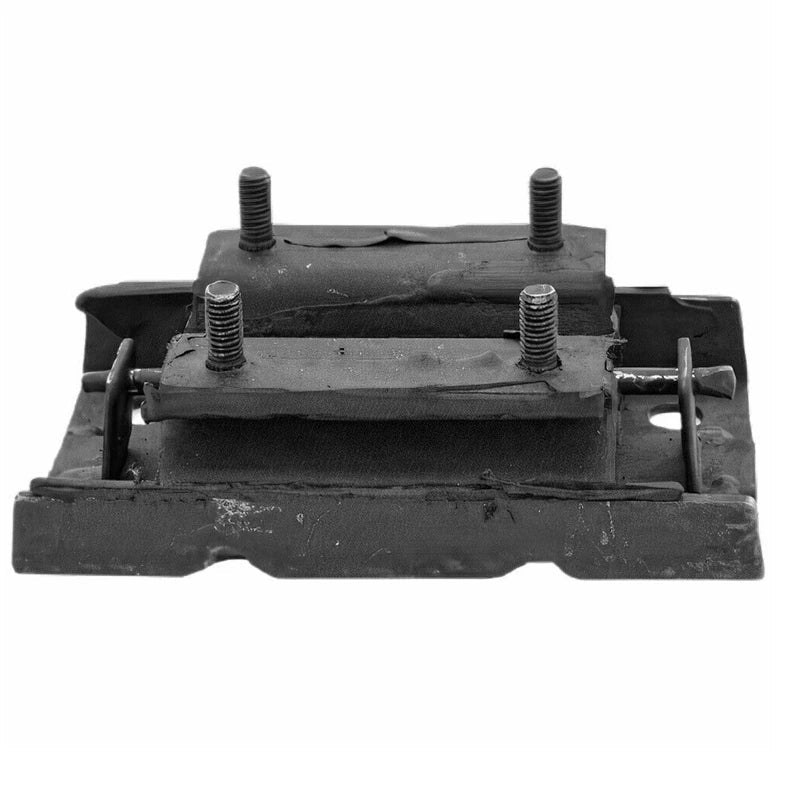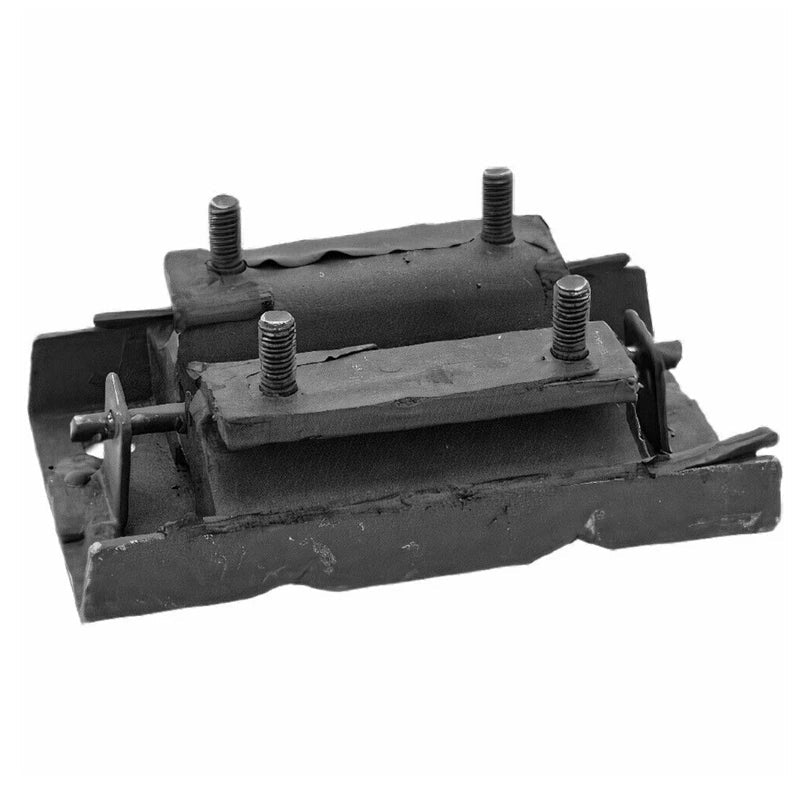
Transmission Mounts: Gearbox Mount & Transmission Mount Replacement Parts for Cars, Vans and Buses
The transmission mount is the component that holds your gearbox in position against the vehicle chassis while absorbing every vibration, torque impulse, and directional load the drivetrain generates. When a gearbox mount fails, that isolation disappears and the gearbox moves. The clunking, vibration, and misalignment that follow place stress on driveshafts, propeller shafts, and gear selector cables simultaneously.
CBT Auto Parts supplies transmission mount and gearbox mount replacements as part of our Transmission and Drivetrain Parts range within the Engine and Powertrain Parts catalogue. Our stock covers Ford Transit, Ford Focus Mk2, VW Bus, and a broad range of passenger and commercial platforms, with rubber and polyurethane gearbox mount options, dispatched from confirmed stock, shipped locally and internationally.
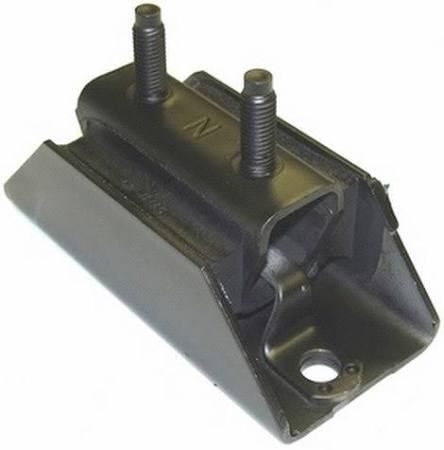
1 product
Showing 1 - 1 of 1 product
What a Transmission Mount Does and Why Its Condition Matters
The transmission mount serves two functions simultaneously, and both are critical to drivetrain performance and longevity.
Its primary function is structural: securing the gearbox to the vehicle subframe or body structure and maintaining the drivetrain alignment that keeps propeller shafts, driveshafts, and gear selector components operating within their designed geometry. When the mount degrades and the gearbox shifts position under load, every component connected to it absorbs misalignment stress it was not designed to carry.
Its secondary function is isolation: the rubber element within the gearbox mount absorbs rotation and torque pulses the gearbox generates during gear changes, throttle inputs, and engine braking events, preventing that energy from transmitting into the vehicle cabin as noise and vibration. A transmission mount in good condition makes a notable contribution to cabin refinement that only becomes apparent when the mount has failed, and the degradation is traced back to its source.
Recognising Transmission Mount Failure Before Secondary Damage Develops
Transmission mount wear is progressive, and because the symptoms it produces overlap with driveshaft, differential, and engine mount faults, isolating the source matters before ordering replacement parts.
These indicators point specifically toward a failing gearbox mount:
- A clunk or thud when selecting a gear or when transitioning between acceleration and overrun: the gearbox is moving within its mounting position as torque direction reverses. The same clunk that a worn universal joint produces, but it originates from the gearbox moving against a degraded mount rather than play within a rotating joint.
- Vibration through the gear lever that was not previously present: a gearbox mount that has lost its rubber isolation transmits drivetrain vibration directly into the gearbox casing and up through the gear selector into the cabin. This is one of the more subtle early indicators of mount degradation.
- Visible gearbox movement when engaging drive from neutral: with the vehicle stationary, an assistant observing the gearbox while drive is selected can often see perceptible movement in a failed mount that would not be present with a serviceable unit.
- Gear selector cable misalignment after no adjustment: a gearbox that has shifted position within its mounting due to a collapsed transmission mount can pull its gear selector cable out of its designed routing geometry, producing shift vagueness that is misattributed to cable or bush wear before the mount is identified as the root cause.
- Increased drivetrain noise and vibration under hard acceleration: torque reaction under hard acceleration loads the transmission mount most severely. A degraded mount allows the gearbox to rotate slightly under this load, transmitting the torque reaction as a harsh vibration rather than absorbing it.
Rubber vs Polyurethane Gearbox Mounts: Which Is Correct for Your Application
The gearbox mount rubber versus polyurethane decision is one that comes up consistently in the transmission mount category, and the correct answer depends on how the vehicle is used rather than which option is simply available.
Standard rubber transmission mounts are the OEM specification for most passenger vehicles. Rubber provides the compliance and vibration isolation the mount's secondary function requires, absorbing drivetrain noise before it enters the cabin. Standard rubber is the correct specification for any vehicle used primarily in standard road conditions where cabin refinement is a priority alongside mechanical function.
Polyurethane gearbox mounts are stiffer than rubber and transmit more vibration into the cabin, which is a disadvantage in a standard passenger vehicle but a deliberate characteristic in a performance or modified application. A polyurethane transmission mount allows less gearbox movement under hard acceleration, which improves drivetrain response and reduces the wear on selector cables and propeller shaft joints that gearbox movement produces. For vehicles used in performance driving, modified for increased power output, or subject to repeated high-load operation, a polyurethane motor and transmission mount combination is the appropriate upgrade over standard rubber specification.
In commercial vehicle applications including the Ford Transit and VW Bus platforms, transmission mount replacement with an OEM-specification rubber unit is the standard recommendation, since commercial load cycles and drivetrain torque outputs are already accounted for in the original rubber compound specification for these applications.
Platform Coverage: Transmission Mounts at CBT Auto Parts
Our gearbox mount inventory covers the passenger and commercial platforms generating the most consistent replacement demand:
- Ford Transit gearbox mount: the Transit is one of the highest-volume commercial van platforms globally, operating under sustained load cycles that accelerate transmission mount wear relative to passenger vehicle equivalents. Both manual and automatic transmission mount variants are available across the Transit's broad production range.
- Ford Focus Mk2 gearbox mount: the Focus Mk2 is an active replacement item driven by the platform's high global volume and the accumulated mileage many examples have now covered. Both the front lower transmission mount and the upper torque rod mount are available for this generation.
- VW Bus transmission mount: the VW Bus and Transporter platforms generate consistent gearbox mount replacement demand across multiple generations, driven by the combination of commercial load use and the age profile of many examples in active service. Both rubber and polyurethane options are available for performance-oriented Bus restorations.
- Bus transmission mount: beyond the VW Bus specifically, our range extends to minibus and coach platform transmission mounts where commercial operating cycles and higher drivetrain torque loads demand correct specification matching before ordering.
What to Inspect Alongside a Transmission Mount Replacement
The transmission mount replacement provides an access opportunity to inspect adjacent components that share the same operating environment and failure conditions:
- Engine mounts: engine mounts and transmission mounts work as a paired system. A collapsed engine mount places compensating load on the transmission mount and vice versa. Replacing a failed gearbox mount alongside an engine mount that is also degraded restores the full isolation system rather than partially addressing it. Engine mount applications are available separately in the Engine and Powertrain Parts section at CBT Auto Parts.
- Gear selector cable and bush condition: a gearbox that has been moving in a failed mount may have induced wear in the selector cable end fittings and bushes through repeated misalignment cycling. Inspect both before concluding the selector system is serviceable after the mount is replaced.
- Propeller shaft and driveshaft alignment: on rear-wheel-drive vehicles, a gearbox that has shifted in its mount changes the operating angle of the propeller shaft at the gearbox output yoke. Confirming the propeller shaft is operating within its designed angular range after a transmission mount replacement prevents premature universal joint wear, returning the vehicle to the workshop for a secondary fault that was created by the original mount failure.