
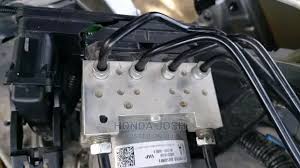
ABS Modules & ABS Sensor: Anti-Lock Brake Module and Sensor Replacements
The ABS uses a wheel speed sensor at each corner to detect an impending lockup, feeding that data to a control module that pulses hydraulic pressure through the ABS pump far faster than any driver could alone. A fault anywhere in this chain- sensor, wiring, or module- usually announces itself the same way: an ABS warning light on the dashboard.
CBT Auto Parts stocks ABS modules and ABS sensors checked against make, model, and wheel position, within the same braking system parts range as Brake Wear Sensors and ADAS safety components. Every listing here is matched to your exact vehicle and corner, with fast nationwide shipping.

17 products
Showing 1 - 17 of 17 products
What the ABS System Does, and the Module vs Sensor Difference
An ABS sensor sits at each wheel hub, reading a toothed ring as it spins and sending a speed signal back to the ABS control module dozens of times per second. The module compares all four signals, and the moment one wheel decelerates faster than the others, it commands the ABS pump to rapidly pulse hydraulic pressure at that corner, releasing and reapplying it many times per second rather than letting the wheel lock solid. Sensors fail far more often than modules, since they sit exposed to road grime, heat, and vibration at the hub, while the module itself lives in a sealed housing and tends to be more reliable over the vehicle's life.
Is It the Sensor or the Module? Diagnosing an Anti-Lock Brake Warning Light
An anti-lock brake warning light on its own, with no other symptoms, almost always points to a single faulty sensor rather than the module itself, since a module failure usually disables the entire anti-lock brake system at once rather than one wheel in isolation. A scan tool reading a specific wheel speed sensor fault code narrows this down quickly, while a generic or multiple-circuit fault code points more toward the anti-lock brake module or wiring harness feeding it. An anti-lock brake system module replacement is a less common repair than a single sensor swap, and most ABS warning lights resolve with the simpler, cheaper fix.
ABS Sensor Replacement Cost
Replacing an ABS sensor cost depends mainly on accessibility and whether the sensor is a standalone part or built into the hub bearing assembly. A sensor mounted separately on the hub or knuckle is usually a straightforward swap, while a sensor integrated into a sealed hub bearing unit pushes the job and the part cost higher, since the whole bearing assembly needs replacing rather than the sensor alone. Front sensors are typically more exposed to road debris and tend to fail slightly more often than rear units on most vehicles.
ABS Control Module Replacement Cost
Replacing ABS control module units costs more than a sensor swap in almost every case, since the module itself is a more complex electronic part and some vehicles require reprogramming or coding to the chassis after installation. Labour also factors in differently, as some modules are integrated directly into the hydraulic pump unit and require careful handling to avoid introducing air into the brake lines during the swap. Confirming the exact fault code before ordering avoids paying for a module replacement when the real issue is a single sensor.
Sensor Position Matters: Front, Rear, Left, and Right
An ABS sensor wheel position is rarely interchangeable across a vehicle, since front and rear sensors often differ in connector type, tooth count, or mounting style even on the same model. A rear right ABS sensor, for example, may carry a completely different part number to its left side counterpart on vehicles with an electronic parking brake fitted to one rear corner only. Getting the wheel position right when ordering, not just the make and model, is the single most common point of failure in an otherwise correct ABS parts order.
Common ABS Applications We Stock
ABS hardware varies enormously between manufacturers, and a few specific applications come up often enough to call out directly. A Mazda 3 ABS module is a frequent request, particularly across the model's various generations where module location and connector type have changed more than once. Beyond named applications like this, the same checked fitment process covers the vast majority of makes and models on the road, with sensor and module stock organised by wheel position as well as vehicle.
ABS Modules, Wear Sensors, and ADAS: Where Each System Sits
ABS sensors and brake wear sensors are easy to confuse since both sit near the wheel and both can trigger a dashboard light, but they monitor entirely different things- wheel speed versus pad thickness- and are stocked in separate dedicated categories as a result. Newer vehicles also layer ESC and ESP stability modules on top of the core ABS system, sharing some of the same wheel speed data but adding broader vehicle stability functions; that hardware sits within the dedicated ADAS and active safety range rather than here. Knowing which system triggered a warning light is the first step to ordering the correct part.
Why Buy ABS Modules & Sensors from CBT Auto Parts
ABS faults are easy to misdiagnose, which is exactly where accurate fitment data and clear guidance pay off.
- ABS sensors and control modules are checked against make, model, and wheel position before listing.
- Coverage spanning common named applications through to less common makes and models.
- Most orders dispatched within 24 hours with tracked nationwide shipping.
- A fitment guarantee and straightforward returns process on every order.


