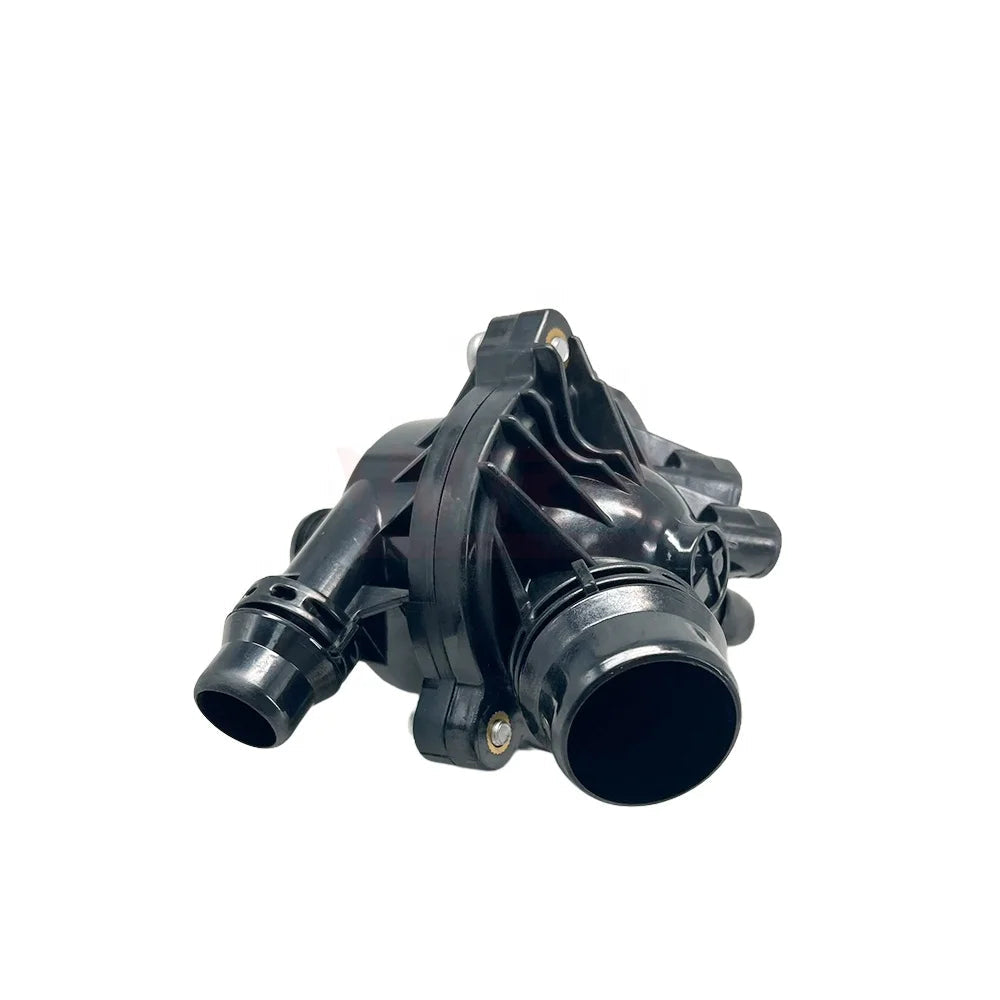
Car Thermostat Replacement Parts and Thermostat Housing Units for Cars and Trucks
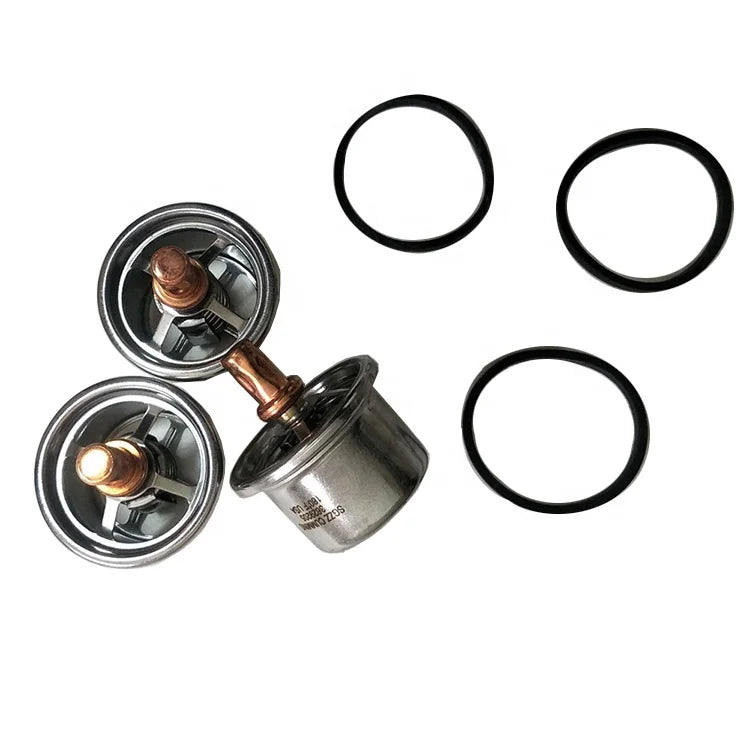
A car thermostat is a small valve that controls how much coolant reaches your radiator, staying shut until the engine warms up and opening to keep the temperature steady. CBT Auto Parts stocks car thermostats and engine thermostats for cars, trucks, and diesel engines.
Every thermostat here is OEM grade or built to OEM specification, so the opening temperature matches what your engine's computer expects. Confirm fitment by year, make, and model, then add a water pump or radiator from the wider Cooling, HVAC and Climate Control Parts range. Orders ship fast worldwide, with support on hand if you're unsure which thermostat fits.

8 products
Showing 1 - 8 of 8 products
What a Thermostat Does, and Why It Fails
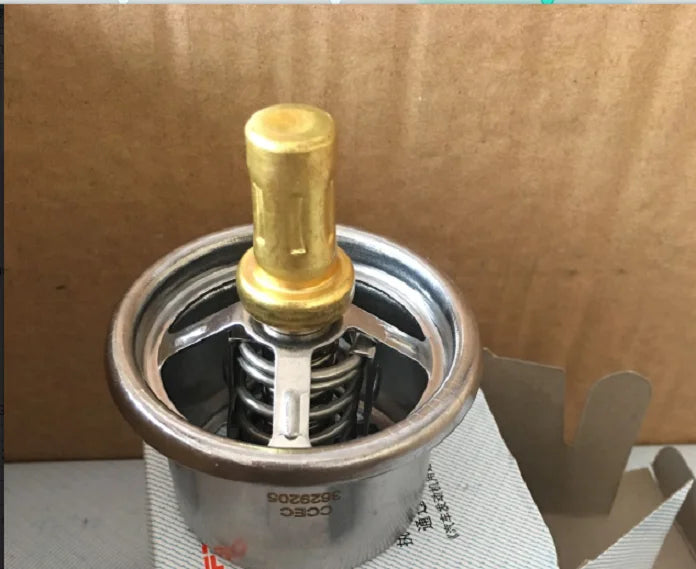
A thermostat is a wax pellet valve that expands as coolant heats up, opening a passage to the radiator once the engine reaches its set operating temperature. Over time, the wax element weakens,s or the valve gums up with deposits, and it tends to fail in one of two directions rather than simply wearing out evenly.
Engine Thermostat Stuck Open vs Stuck Closed
An engine thermostat stuck open never fully closes, so coolant keeps flowing to the radiator even when the engine is cold, leading to a heater that blows lukewarm air, a sluggish warm-up, and a temperature gauge that sits lower than normal. A thermostat stuck closed does the opposite, trapping coolant in the block, and the gauge climbs quickly toward overheating with little warning, often within a few minutes of driving. Of the two, a stuck-closed thermostat is the more urgent repair, since it risks actual engine damage rather than just comfort and economy.
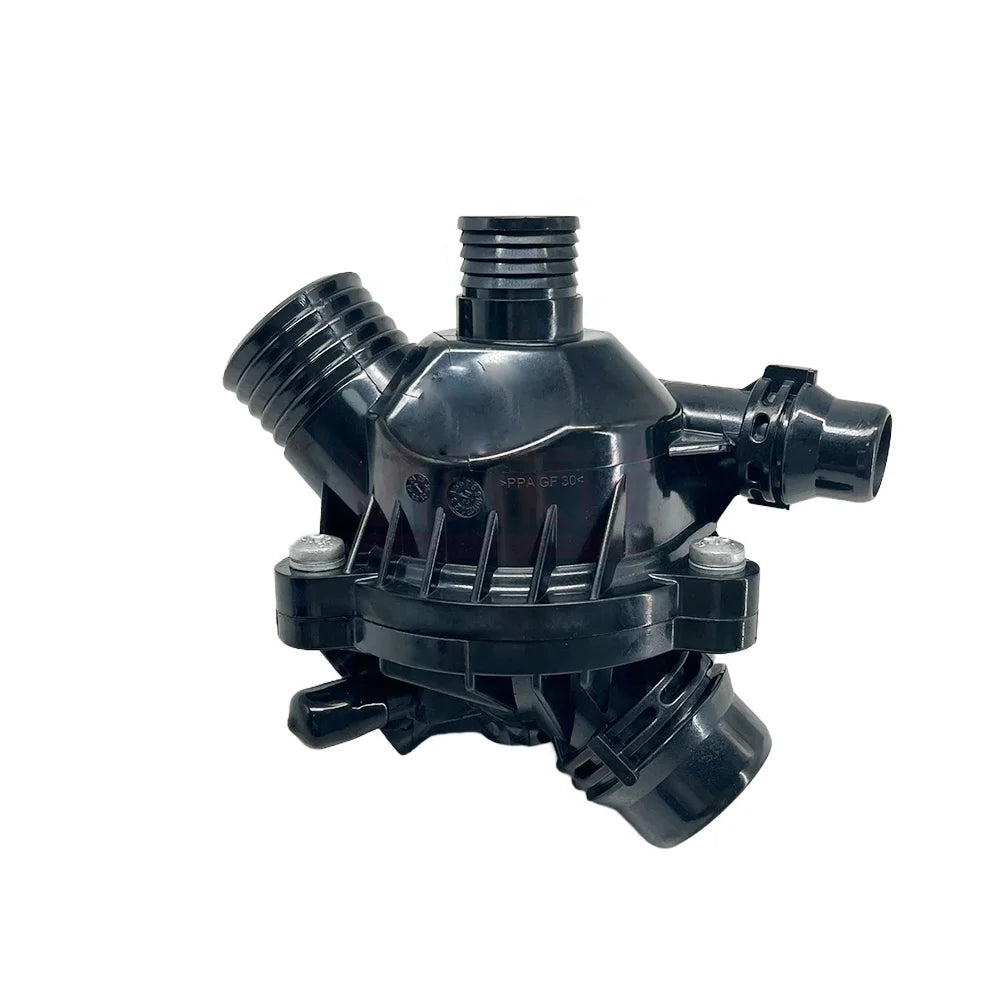
Thermostat Housing Leak: Common Causes
A thermostat housing leak usually comes from a degraded gasket or a warped housing surface rather than the thermostat itself, especially on plastic housings that get brittle with age and heat cycling. Coolant seeping from the housing seam, rather than from a hose clamp or the radiator itself, is the giveaway that the housing or its gasket is the source. Replacing the thermostat at the same time as the housing is common practice here, since labor to access one covers the other. Aftermarket housings here are pressure tested before listing, since a housing that looks fine can still seep once the system is back under operating pressure.
Car Thermostat Replacement: What's Involved
Car thermostat replacement is usually straightforward on engines where the housing sits in an accessible spot, drain some coolant, remove the housing, swap the thermostat and gasket, then refill and bleed the system. On some layouts, the housing sits low and tight against other components, which adds time but not real complexity. Orientation matters to the wax pellet end faces the engine side in most designs, and installing it backward is a common reason a freshly replaced thermostat still runs cold.
Thermostat Replacement Cost: What Affects the Price
Thermostat replacement cost is driven mostly by access rather than the part itself. The thermostat is inexpensive on its own, but labor varies a lot depending on whether the housing sits up top or buried behind other components. A housing replacement at the same time adds a modest amount to the part cost but rarely changes the labor time much, since it's removed either way. Diesel and larger displacement engines sometimes carry a higher cost simply because the housing is larger and harder to reach.
Diesel Engine Thermostat vs Gasoline Thermostat
A diesel engine thermostat typically opens at a slightly different temperature than a gasoline counterpart, since diesel combustion runs cooler at idle and the engine relies more heavily on the thermostat staying shut longer to reach efficient operating temperature. Housings on diesel applications also tend to be larger to handle higher coolant volume. Mixing the two types, even when they physically fit, can leave a diesel engine running below its intended temperature range.
Why Opening Temperature Ratings Matter
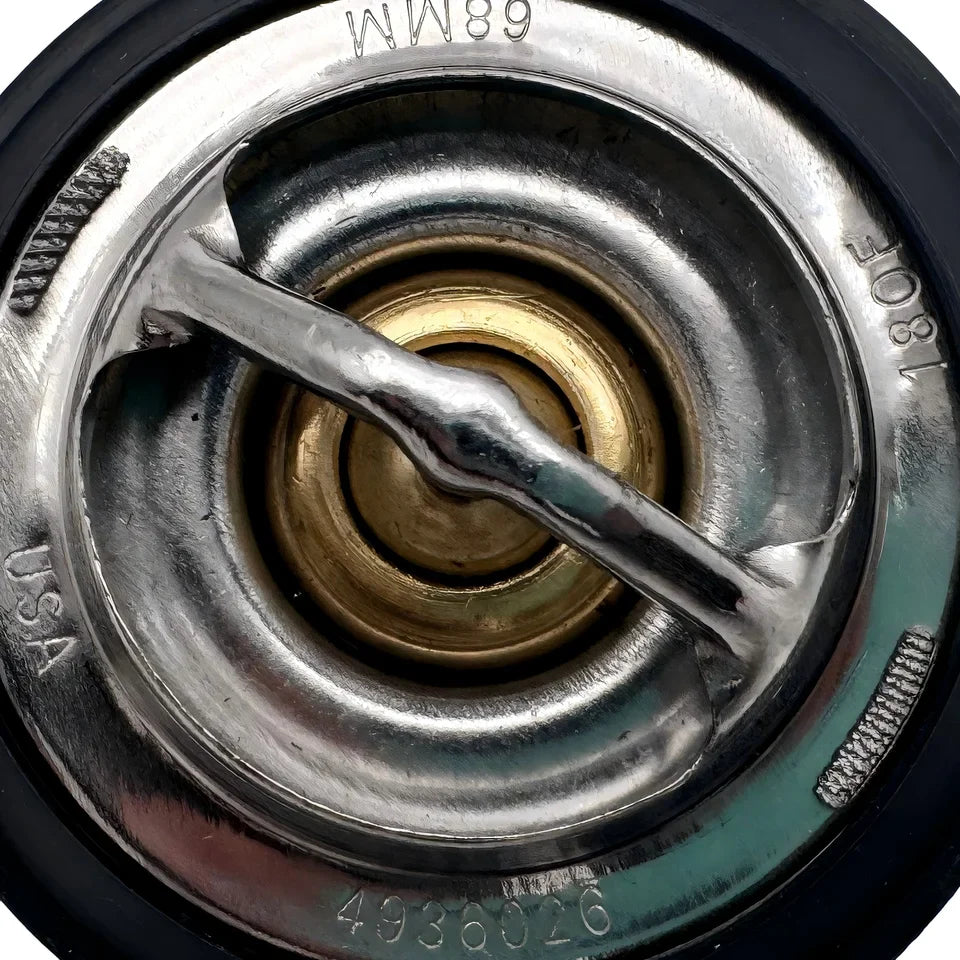
Thermostats aren't interchangeable just because they fit the same housing. The opening temperature is usually stamped on the unit and ranges from around 180 to 203 degrees Fahrenheit, depending on the engine. A lower-rated thermostat opens sooner, which can help in hot climates or under sustained load, but it also means the engine spends more time below its designed efficiency range during normal driving. Modern engines tuned by their computer for a specific operating window are especially sensitive to this; running outside that window can trigger a check engine light even without any other fault present. Matching the original rating, rather than assuming a slightly different number is close enough, keeps fuel economy and emissions behavior where the manufacturer intended.
Not the Same as Your Cabin Climate Control
A car thermostat regulates engine coolant temperature and has nothing to do with the dial or display that sets cabin temperature inside the vehicle. If your concern is a climate control screen, a stuck temperature dial, or inconsistent cabin heat unrelated to engine warm-up, that's covered separately under our HVAC Control Modules range rather than this one.
What Pairs With Your Thermostat
A new thermostat is often installed alongside a water pump, since both sit in the same coolant path and a worn pump can mimic thermostat symptoms like slow warm-up or gradual overheating. If the radiator is original to the vehicle and several years old, replacing it around the same time avoids reopening the cooling system again soon after. Fresh coolant matched to the engine's specification should always go back in once the job is finished.
Ordering and Fitment
Listings here show year, make, and model coverage, along with the correct opening temperature rating where an engine offers more than one factory option. Most thermostats and housings ship within one business day, and a part that doesn't fit is accepted for return without hassle. If you're not sure whether your engine uses a separate housing or a combined unit, our support team can confirm before you order. Each thermostat also ships with a new gasket or O-ring already included, so a missing seal never delays an otherwise straightforward swap.