
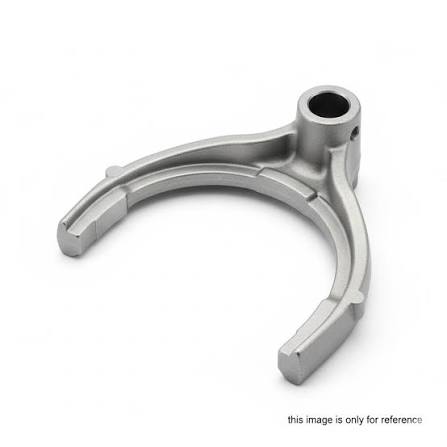
Shift Forks: Gear Shift Fork & Gearbox Shift Fork Replacement Parts for Manual Transmissions
Inside every manual gearbox, shift forks are the mechanical intermediaries between the gear lever in your hand and the synchromesh rings inside the transmission. They are precision components operating under constant mechanical load, and when they wear, the gearbox stops selecting gears cleanly, jumps out of ratio under load, or refuses engagement altogether.
CBT Auto Parts supplies gear shift fork and manual gearbox shift fork replacements as part of our Transmission and Drivetrain Parts range. Whether you are rebuilding a gearbox or replacing a single damaged component, our shift fork gearbox parts are OEM-grade, dispatched from confirmed stock, and delivered to both local and international destinations.

15 products
Showing 1 - 15 of 15 products
What a Shift Fork Does and Why Precision Matters
Most gearbox conversation centres on synchromesh rings, bearings, and gear sets, and shift forks rarely receive the diagnostic attention they deserve until a gearbox is already disassembled. That is a problem, because a worn or bent shift fork undermines every other component it engages with, regardless of their individual condition.
The shift fork sits within the gearbox casing and engages directly with a groove machined into the collar of a synchro hub or sliding dog clutch. When the gear lever is moved, the fork translates that input into a precise lateral sliding motion along the selector rod, moving the synchro assembly into contact with the target gear. The dimensional accuracy of that movement determines whether gear engagement is positive and clean, or grinding and imprecise.
Three factors make shift fork precision critical:
- Pad thickness: the contact pads at each end of the fork engage the synchro collar groove. As these pads wear, the fork develops float within the groove that introduces imprecision into the gear selection movement. Even a fraction of a millimetre of excess float changes engagement quality noticeably.
- Fork geometry: the fork must remain perfectly planar across both arms. A shift fork that has been subjected to forced gear engagement under load, particularly when a driver forces a gear before the synchromesh has completed its work, can develop a subtle bend that misaligns the engagement path.
- Selector rod interface: the bore through which the shift fork slides on the selector rod must maintain its dimensional accuracy. An oval or corroded bore introduces lateral play that the shift movement was never designed to accommodate.
Identifying Shift Fork Failure: What the Gearbox Is Telling You
Shift fork wear does not produce the dramatic whining or grinding of a bearing failure; it communicates through the quality of gear selection itself. Because these symptoms share characteristics with synchromesh wear, a methodical approach to diagnosis prevents unnecessary component replacement during a gearbox rebuild.
These are the presentations that point specifically toward shift fork condition rather than adjacent gearbox components:
- A specific gear that jumps out under load: if the gearbox consistently disengages from the same ratio under acceleration or engine braking, a worn shift fork pad is allowing the synchro collar to walk back out of engagement when drive load is applied. This is the single most diagnostic indicator of shift fork wear within a gearbox.
- Gear selection that requires deliberate force through a specific gate: healthy synchromesh and a correctly dimensioned shift fork produce light, positive engagement. If one gear gate requires noticeably more effort than the others, the fork geometry or pad thickness is the first place to inspect after confirming the synchromesh ring condition.
- Notchy or imprecise movement through a single gate with clean movement on all others: generalised notchiness across all gates points to linkage, gear selector cable, or synchromesh issues. Notchiness confined to a single gate points toward that gate's shift fork.
- Grinding on engagement of one specific ratio that clears after the gearbox warms up: when the fault is temperature-dependent and confined to a single gear, the shift fork pad clearance within the synchro groove is often the variable. Cold transmission fluid reduces synchromesh effectiveness, and a fork already at its wear limit struggles to hold the collar fully engaged at low fluid temperature.
Shift Fork Repair vs Replacement: What Actually Makes Sense
The question of shift fork repair versus outright replacement comes up during most gearbox rebuilds where the forks are found to be marginal rather than clearly failed. The answer is straightforward in most production vehicle applications and more nuanced in competition or specialist platforms.
In standard passenger and light commercial applications, shift fork replacement is almost always the correct decision over attempted repair. The manufacturing cost of a quality replacement shift fork is low relative to the labour involved in a gearbox rebuild, and the risk of a repaired fork failing prematurely after the gearbox has been reassembled and reinstalled is not a risk worth carrying for a minor cost saving.
Shift fork repair, typically through welding and remachining of worn pad contact faces, is a legitimate process in applications where a direct replacement fork is unavailable. Racing gearbox applications, specialised commercial transmissions, and discontinued platforms where replacement parts are no longer manufactured are the realistic candidates for fork reconditioning. In these cases, the repaired fork must be dimensionally verified against the original specification drawing before installation, not simply inspected visually.
For the mainstream manual gearbox applications CBT Auto Parts covers, direct replacement shift forks are available, making a repair process unnecessary in the vast majority of cases.
Shift Fork Selector and Its Role in the Selection System
The shift fork does not operate in isolation; it is one component within a coordinated selector assembly that includes the shift fork selector rod, detent springs, interlock mechanisms, and in some gearboxes, a separate shift fork selector plate or tower assembly. Understanding how these components interact helps buyers determine whether a shift fork alone is the correct order, or whether adjacent selector components also require attention during a rebuild.
The shift fork selector rod carries each fork in its correct lateral position and constrains its movement to a single plane. Detent springs and balls on the rod create the positive engagement feel at each gear position that tactile click that confirms a ratio has been selected. Interlock mechanisms prevent two forks from moving simultaneously, which would cause two gears to engage at once and lock the gearbox mechanically.
When a gearbox shift fork replacement is being planned, the selector rod and detent components should be inspected at the same time. A new fork installed on a worn selector rod with degraded detent spring tension will not restore the full selection quality that a complete selector assembly replacement achieves, and accessing these components again after a gearbox is reassembled is a significant additional labour cost.
Where gear selector issues are presenting at the gear lever rather than within the gearbox itself loose lever movement, difficulty reaching specific gates, or play in the shift mechanism above the transmission the fault is more likely in the gear selector and gear selector cable than in the internal shift fork assembly. Those components are covered separately in our Transmission and Drivetrain Parts range under Gear Selectors.


