
Car Fuse Replacements & Automotive Fuse Types
A dead accessory, a dashboard light that won't come on, or a component that stopped working overnight is more often a blown fuse than anything more serious, and it's usually the cheapest fix on the entire vehicle. CBT Auto Parts stocks car fuses across blade, mini, micro, and specialist formats for passenger vehicles, trucks, and marine applications, part of our auto electrical parts range.
Every fuse replacement listed here is sorted by amperage and physical fuse type, so you're matching the exact spec your circuit needs rather than guessing at a size. We stock the full range of car fuse types, from mini blade fuses to larger high-current variants used on alternator circuits, with most orders shipping same day from our Australian warehouse and support on hand if you're unsure which rating your vehicle takes.
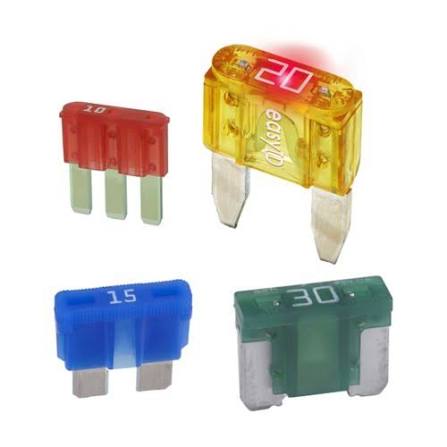
2 products
Showing 1 - 2 of 2 products
Why Fuses Blow, and What It Tells You
A fuse is designed to fail before the wiring or component it protects does, which means a blown fuse is often a symptom rather than a random fault.
- A short circuit somewhere in the wiring, often from chafed insulation or a pinched wire
- A failing component drawing more current than the circuit is rated for
- Water ingress causing a short at a connector or ground point
- An aftermarket accessory wired without a properly rated fuse in the circuit
- Simple age-related fatigue in fuses that have carried a marginal load for years
If a replacement automotive fuse blows again immediately, the fuse itself usually isn't the problem, and it's worth checking the circuit before fitting a third one.
Understanding Car Fuse Types
Not every fuse looks the same, and fitting the wrong physical type is one of the most common mistakes drivers make.
- Mini and micro blade fuses are the most common in modern passenger vehicles, sized for lower current accessory circuits
- Standard blade fuses handle mid-range loads and are still common on older vehicles and larger circuits
- Maxi fuses and fusible links handle high-current applications, including main power feeds and alternator circuits
- Glass tube fuses appear on some older or classic vehicles and aren't interchangeable with blade types
- Always match physical size and amperage rating exactly; a fuse that fits but carries the wrong rating defeats its purpose
Fuses in Cars vs Trucks and Commercial Vehicles
Fuses in car applications generally sit in a lower amperage range than commercial vehicles, which often run additional circuits for auxiliary lighting, winches, or trailer wiring. Higher output alternators on trucks and 4WDs also mean the car alternator fuse protecting that circuit carries a higher rating than a typical passenger vehicle equivalent. Checking your owner's manual or the fuse box diagram, rather than assuming based on physical size alone, avoids fitting an under- or overrated fuse.
Diagnosing a Blown Fuse Correctly
Testing a fuse properly takes only a minute and avoids replacing fuses unnecessarily.
- Visually inspect the fuse element first; a broken or blackened strip usually confirms failure
- Use a test light or multimeter across the fuse terminals if the fuse looks intact but the circuit still isn't working
- Check for continuity rather than assuming a fuse is fine because it looks undamaged
- If several fuses blow in sequence, stop and trace the wiring fault before continuing to replace fuses
Where to Find Us Locally
For drivers searching for fuses near me who need a same-day fix rather than a delivery, our Australian warehouse dispatches fast, and many common car fuse types are available for quick collection or next-day arrival depending on your location.


