
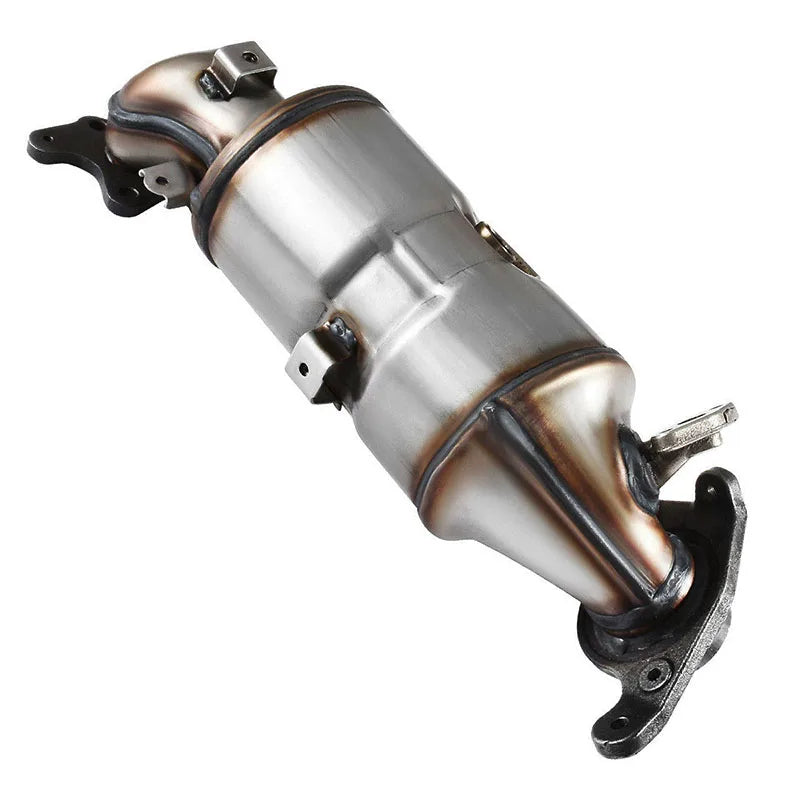
Catalytic Converters for Cars, Trucks & Diesel Engines
A catalytic converter sits in your exhaust line and converts harmful gases into less damaging ones before they leave the tailpipe, making it one of the most tightly regulated parts on your vehicle. Once it fails, corrodes, or gets stolen, driving without one usually means an automatic emissions test failure and, in many regions, a legal issue.
CBT Auto Parts carries standard and high-flow catalytic converter options across our Exhaust & Emission Control Parts range, alongside diesel catalytic converter builds for heavier applications, each checked against OEM specifications before listing. Every cat converter ships with fitment data matched to your engine, connecting cleanly to your exhaust manifold and exhaust pipe, with fast nationwide delivery so you are not driving illegally longer than necessary.

45 products
Showing 1 - 24 of 45 products
Why Catalytic Converters Fail (or Disappear)
Catalytic converter problems fall into two very different categories, and knowing which one you are dealing with changes what you need to do next.
Wear and failure:
- Internal honeycomb structure clogs from unburnt fuel, often caused by an unrelated engine misfire.
- Overheating warps the internal substrate, usually following a prolonged rich fuel mixture.
- Age and mileage naturally degrade catalytic converter efficiency over time, even without a specific triggering fault.
Theft:
- Catalytic converters contain precious metals, which is exactly why theft rates have climbed sharply in recent years.
- Trucks and SUVs with higher ground clearance are frequent targets simply because they're easier to access.
- A distinct, sudden increase in exhaust volume right after a vehicle has been parked overnight is the most common sign of a stolen catalytic converter.
Catalytic Converter Cleaning vs. Replacement
Catalytic converter cleaning is worth attempting when the issue is mild clogging rather than physical or thermal damage. A cleaning product or professional cleaning service can restore flow in cases of light carbon buildup, and it is considerably cheaper than replacement. However, cleaning will not fix a cracked housing, a melted substrate, or a converter that has failed an emissions test due to catalyst efficiency, not blockage. If a check engine light returns shortly after cleaning, replacement is almost always the more reliable path forward.
Understanding Catalytic Converter Replacement Cost
Catalytic converter replacement cost depends heavily on three factors: your vehicle's emissions standard, whether the converter is a standard or high-flow unit, and whether it is a direct fit or a universal design requiring welding. A standard passenger car replacement typically sits at the lower end of the range, while diesel catalytic converter units and vehicles requiring dealer-specific parts run higher. Buying the correctly fitted part the first time, rather than a universal unit that needs custom fabrication, is usually the more cost-effective route once labor is factored in.
High Flow vs. Standard Catalytic Converters
The difference between a standard and a high-flow catalytic converter comes down to how restrictive the internal substrate is.
- Standard catalytic converters are built to match factory emissions performance exactly, prioritizing full compliance over airflow.
- High-flow catalytic converters use a less dense substrate, reducing back pressure and modestly improving exhaust flow, which appeals to performance-focused owners.
- Emissions compliance varies by region for high-flow units, so confirm local regulations before installing one on a vehicle that will face emissions testing.
- Diesel applications generally require diesel-specific catalytic converter designs due to different exhaust temperatures and particulate profiles compared to gasoline engines.
What to Know About Catalytic Converter Theft and Scrap Value
Catalytic converter scrap price fluctuates with precious metal markets, which is exactly why theft remains common. If your converter has been stolen, removing a catalytic converter yourself for scrap is not something CBT Auto Parts facilitates or recommends outside of legitimate replacement work; our focus is getting you a properly fitted replacement part quickly. A few practical deterrents worth knowing: anti-theft shields, marking your converter with a traceable ID, and parking in well-lit or covered areas all measurably reduce theft risk.
How Your Catalytic Converter Connects to the Rest of Your Exhaust System
A catalytic converter does not work in isolation. It sits downstream of your exhaust manifold and upstream of your oxygen sensors, which monitor its efficiency in real time. A failing converter often triggers oxygen sensor codes that look unrelated at first glance, and a mismatched or poor-quality converter can throw sensor readings off even when installed correctly. That is why CBT Auto Parts lists catalytic converters within the same fitment-checked system as our manifolds, sensors, and exhaust pipe range, so the whole chain works together instead of fighting itself.


