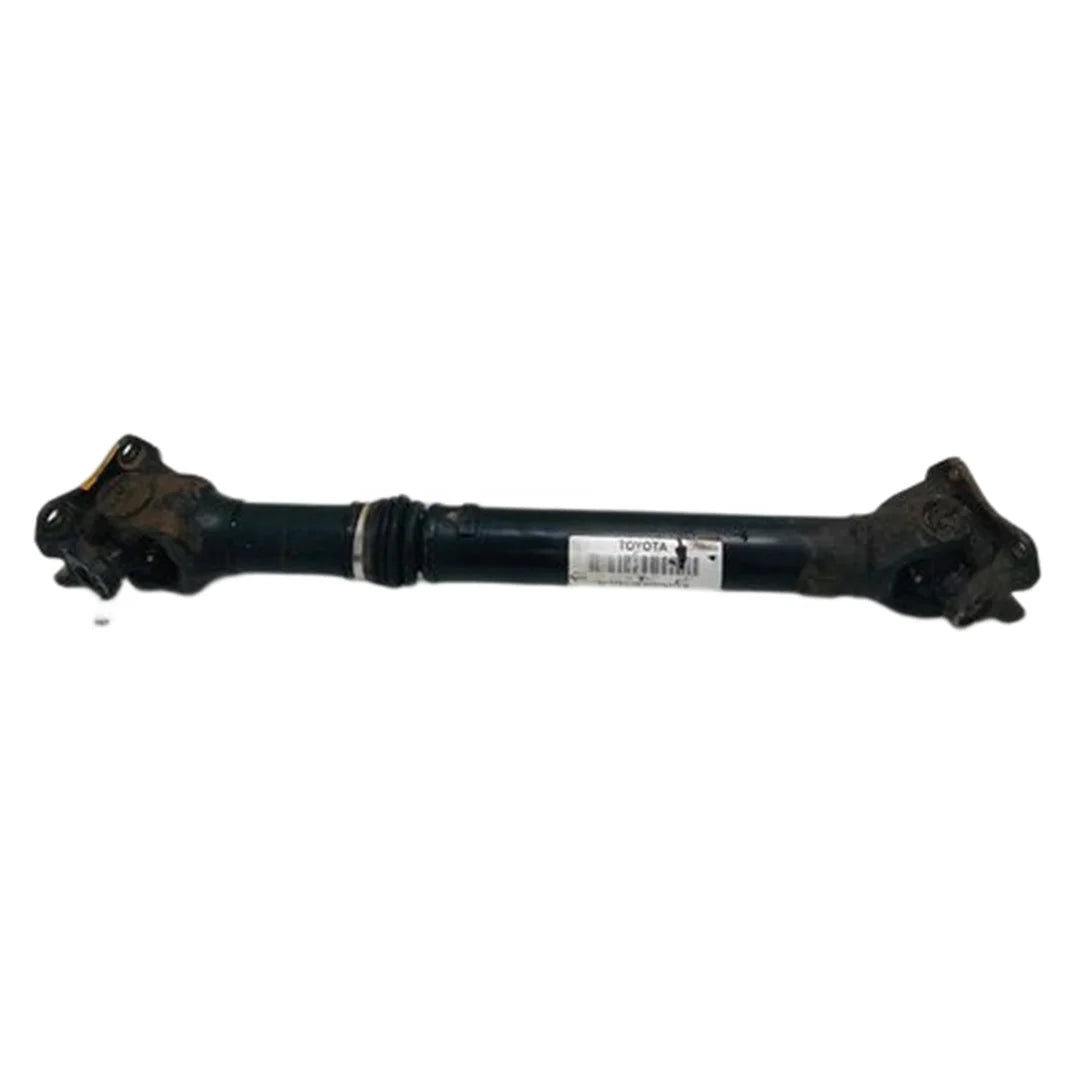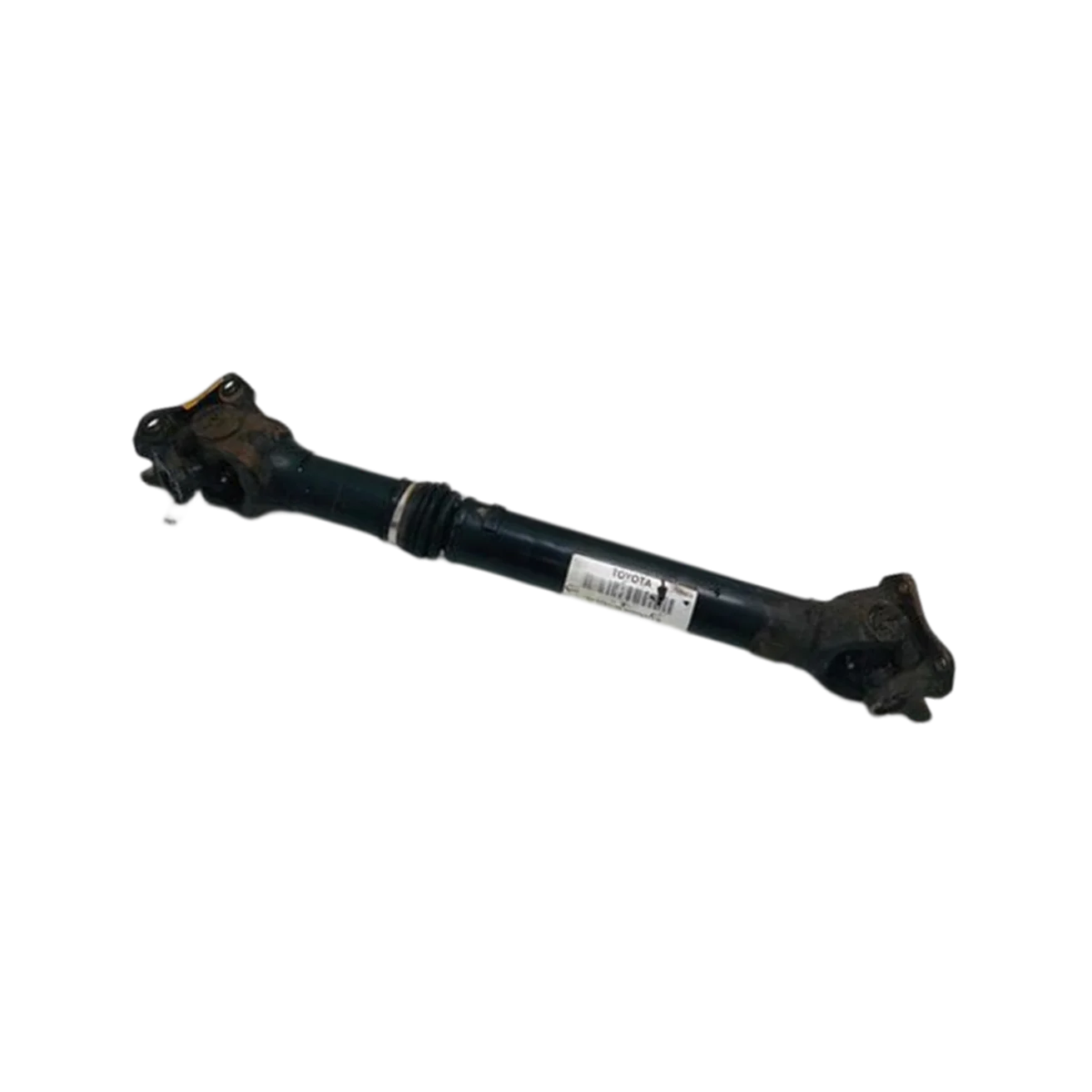
Driveshafts: Front & Rear Drive Shaft Replacements for Cars, Trucks & 4x4 Vehicles
Every rotation of your engine eventually reaches the road through a driveshaft. It is the rotating shaft that carries torque from your gearbox or transfer case toward the wheels, and without it, drive cannot reach the ground regardless of how well everything else in your transmission system is functioning. When a car driveshaft develops wear, vibration, clunking, and loss of drive follow in sequence.
CBT Auto Parts supplies front driveshafts and rear driveshaft replacements as part of our Transmission and Drivetrain Parts range. Our stock covers Toyota HiLux, Subaru WRX, Toyota Celica, Toyota Corolla, Suzuki Samurai, and a wide range of passenger, performance, and 4x4 platforms OEM-grade automobile drive shaft units, dispatched from confirmed stock, delivered locally and internationally.
8 products
Showing 1 - 8 of 8 products
How a Driveshaft Fits Into Your Drivetrain
Understanding where the driveshaft sits in the drivetrain makes diagnosis and parts procurement significantly more straightforward, particularly because different drivetrain configurations use the term in different contexts, and confusion between a driveshaft, a propeller shaft, and a CV axle shaft is common.
In rear-wheel-drive and 4x4 vehicles, the driveshaft typically refers to the rotating shaft that runs longitudinally between the gearbox output and the differential, transmitting torque along the length of the vehicle. In 4WD applications, two driveshafts are typically present: one running to the front differential and one to the rear. These shafts incorporate universal joints at each end to accommodate the angular changes that occur as the suspension moves and the drivetrain flexes under load.
In front-wheel-drive vehicles, the term is more commonly applied to the lateral shafts that carry drive from the differential to each front wheel; these shafts incorporate CV joints rather than universal joints, and are sometimes referred to as CV axle shafts. At CBT Auto Parts, CV axle shaft applications are catalogued specifically under our CV Joints range to ensure fitment clarity, while driveshaft covers the longitudinal torque-carrying shafts used in rear-wheel-drive, 4x4, and all-wheel-drive drivetrain layouts.
Propeller shafts, which connect the gearbox to the differential in longer-wheelbase and commercial applications, are listed separately in our Transmission and Drivetrain Parts range under Propeller Shafts, where double cardan and two-piece configurations are covered.
What Causes Driveshaft Failure and What It Sounds Like
A driveshaft is a high-speed rotating component under constant load. The failure mechanisms are well-established, and in most cases the driveshaft communicates its condition clearly before complete failure occurs, provided the driver is familiar with what to listen and feel for.
Universal Joint Wear
The universal joints at each end of a longitudinal driveshaft are the highest-wear points in the assembly. As the needle bearings within the U joint degrade, rotational play develops in the joint, and this play translates directly into vibration and impact noise felt through the vehicle. A clunking sound during take-off, or when transitioning between acceleration and overrun, is the clearest early indicator of U-joint wear within a driveshaft assembly. Universal joints are catalogued separately within our Transmission and Drivetrain Parts range for applications where the driveshaft tube itself remains serviceable and only the joint requires replacement.
Centre Bearing Failure on Two-Piece Shafts
Longer-wheelbase vehicles including full-size trucks and some SUV platforms use a two-piece driveshaft supported at the midpoint by a centre bearing mounted to the vehicle chassis. When this bearing degrades, the driveshaft loses its supported alignment point and begins to oscillate, producing a sustained vibration that increases with vehicle speed and is felt throughout the floor and seat rather than specifically through the steering wheel.
Imbalance From Physical Damage
A driveshaft that has been struck by road debris, bottomed out on an obstacle, or had a balance weight dislodged will develop rotational imbalance. Unlike bearing wear, which worsens progressively and produces intermittent symptoms, imbalance from physical damage can appear suddenly and produce vibration that is present immediately from the point of damage. Even a small indentation in the shaft tube changes the mass distribution enough to produce noticeable vibration at highway speeds.
Slip Yoke Wear
In driveshafts that incorporate a sliding slip yoke, which accommodates the change in effective driveshaft length as suspension compresses and extends, the internal splines of the yoke wear against the gearbox output shaft over time. A worn slip yoke produces a clunk when transitioning from acceleration to deceleration, and in advanced cases allows enough longitudinal play in the shaft to cause intermittent loss of drive feel at the wheel.
Diagnosing a Driveshaft Problem: Before You Order
Because driveshaft symptoms overlap with differential bearing wear, universal joint failure, transmission mount deterioration, and in 4x4 vehicles with transfer case output bearing wear, a systematic process before ordering the replacement shaft avoids unnecessary expenditure.
Work through the following before concluding that a full drive shaft replacement is required:
- Rotate the driveshaft by hand with the vehicle stationary: with the drivetrain in neutral and the parking brake released, rotate the shaft and feel for roughness, binding, or clunking at the U-joint crosses. A serviceable shaft rotates smoothly and consistently.
- Check for visible play at each universal joint: grip the shaft close to each joint and attempt to move it laterally and rotationally. Any perceptible play confirms U-joint wear. If the shaft itself is straight and the tube undamaged, a U-joint replacement may be the complete solution.
- Inspect the shaft tube for physical bending or dents: even a minor bend is sufficient to cause significant imbalance at speed. A bent tube cannot be dynamically balanced to an acceptable standard and requires full shaft replacement.
- Check the centre bearing for rubber deterioration: on two-piece shafts, the rubber carrier surrounding the centre bearing absorbs vibration and isolates the bearing from the chassis. Cracked or collapsed rubber in this mount transmits bearing noise and vibration directly into the vehicle structure.
- Inspect the slip yoke: look for corrosion on the external spline surface and check for excessive longitudinal movement at the yoke-to-output shaft interface.
A driveshaft that passes all the above checks but still produces vibration at a specific speed range is almost certainly an imbalance issue requiring dynamic balancing at a driveline workshop, not a replacement.
Platform Coverage: Drive Shafts at CBT Auto Parts
Our car driveshaft range is built around the platforms that generate the most consistent replacement demand globally, spanning Japanese passenger vehicles, performance platforms, 4x4 working trucks, and off-road purpose-built applications:
- Toyota HiLux driveshaft: the HiLux is among the highest-replacement-demand driveshaft applications globally, used in working fleet, agricultural, and off-road environments where drivetrain components operate at the limits of their design specification. Front and rear driveshaft units are available across multiple generation ranges.
- Subaru WRX driveshaft: the WRX all-wheel-drive system places consistent torque demands on both front and rear shafts under performance driving conditions. The front driveshaft on the WRX platform is particularly prone to accelerated wear on vehicles that have been used competitively or on modified power outputs.
- Toyota Celica driveshaft: covering the ST and ZZT Celica generations in both front-wheel-drive and all-wheel-drive configurations, with availability across multiple market specifications including Japanese domestic, European, and export builds.
- Toyota Corolla driveshaft price: the Corolla is one of the highest-volume passenger vehicles globally, and driveshaft availability across generation ranges from the E90 through to the E170 series reflects that volume. Toyota Corolla driveshaft price competitiveness is a consideration for budget-conscious owners of one of the world's most widely used family cars.
- Suzuki Samurai front driveshaft: the Samurai front driveshaft operates under demanding off-road conditions where approach angles, articulation, and high-torque low-speed loading combine to accelerate wear. Both the front driveshaft unit and supporting uU-jointcomponents are available for this platform.
- Swift drive shaft: the Suzuki Swift is a high-volume light passenger vehicle with active driveshaft replacement demand across Asian, African, and European markets where this platform operates in high-cycle urban conditions.
New vs Remanufactured Drive Shafts: Making the Right Call
The choice between a new and a remanufactured automobile driveshaft is less straightforward than in some other drivetrain component categories because driveshaft quality is heavily dependent on the precision of the balancing process rather than simply the condition of the steel tube.
A new driveshaft from a quality aftermarket manufacturer is dynamically balanced at the factory to a specified tolerance before it leaves production, and that balance tolerance is what determines whether the shaft operates smoothly at highway speeds. A quality-sourced new unit for a high-volume platform like the Toyota HiLux or Subaru WRX is, in most cases, the lowest-risk option for a straightforward replacement.
A remanufactured driveshaft where the tube is retained, and joints, centre bearings, and yokes are replaced can be a sound option for low-volume or discontinued platforms where a new unit is not available. The critical requirement is that the remanufactured shaft is dynamically balanced after assembly, not simply built from serviceable components and assumed to be within tolerance. An unbalanced shaft, regardless of whether its components are new, will produce the same vibration as the worn unit it replaced.
CBT Auto Parts sources drive shafts for car applications from manufacturers who document their balancing specifications. Every unit in our catalogue is confirmed against the balance and fitment requirements of its target application before being listed.