
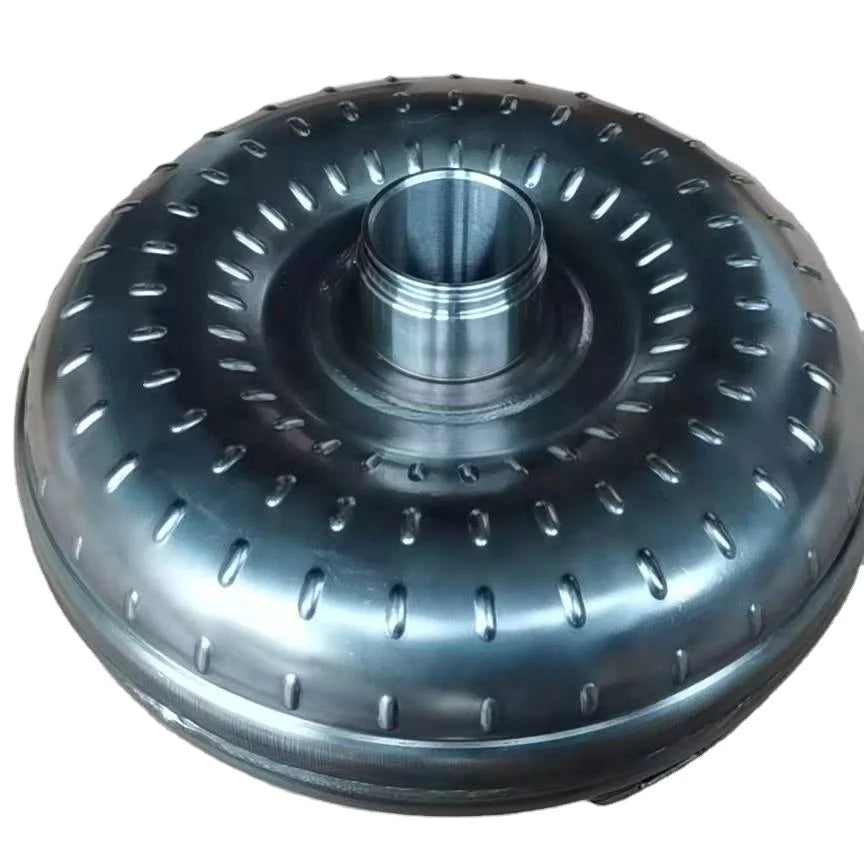
Torque Converters: Automatic Transmission Torque Converter Replacements for Cars & Trucks
In an automatic transmission, the torque converter does everything a clutch does in a manual vehicle, only it does it through fluid dynamics rather than mechanical friction. It keeps your engine running while the vehicle is stationary, multiplies torque during acceleration, and locks up at highway speeds to deliver direct mechanical drive. When a torque converter begins to fail, the entire automatic transmission system feels it immediately.
CBT Auto Parts stocks automatic transmission torque converter replacements as part of our Transmission and Drivetrain Parts range. Our range covers 4L60E, 4L60, and 6L80 platforms, among others, OEM-grade units at a competitive torque converter price, dispatched from real confirmed stock, and shipped to destinations both locally and worldwide

31 products
Showing 1 - 24 of 31 products
What a Torque Converter Actually Does Inside an Automatic Transmission
Most drivers understand that the torque converter sits between the engine and the automatic gearbox, but fewer understand the mechanical sophistication inside a unit that is often dismissed as simply a fluid coupling. There are four distinct operating phases that happen inside every torque converter for automatic transmission, and knowing them changes how you interpret failure symptoms.
The Four Operating Phases
Fluid Coupling Phase: At low engine speeds and when stationary, the torque converter operates as a fluid coupling only. The impeller, driven by the engine crankshaft, circulates transmission fluid against the turbine, which is connected to the gearbox input shaft. No mechanical connection exists at this stage. This is what allows the engine to keep running while the vehicle sits in drive at a traffic light without the transmission stalling the engine.
Torque Multiplication Phase: As throttle input increases from a standing start, the stator, a directional component mounted on a one-way clutch between the impeller and turbine, redirects returning fluid to amplify torque output. A well-functioning torque converter can multiply engine torque by a factor of two or more during this phase, which is why an automatic transmission vehicle can feel deceptively strong from a standing start compared to its engine's stated output figures.
Coupling Phase: As vehicle speed increases and the speed differential between the impeller and turbine reduces, the stator's one-way clutch releases and the unit enters full fluid coupling, passing torque through at near-one-to-one efficiency without further multiplication.
Lockup Phase: At sustained highway speeds, the torque converter lockup clutch mechanically links the impeller and turbine into a single rotating assembly, eliminating all fluid slippage and delivering direct mechanical drive between the engine and gearbox. This is the phase that makes modern automatic transmissions fuel-competitive with manual gearboxes at cruise, and it is also the phase most commonly associated with torque converter shudder when the lockup clutch lining wears, or contamination enters the circuit.
Five Signs Your Torque Converter Is Failing
The challenge with torque converter diagnosis is that several failure symptoms mirror other automatic transmission faults, particularly solenoid wear, low fluid level, and valve body issues. These five indicators, taken in combination, point specifically toward the converter rather than adjacent system components:
- Shudder during light throttle at highway speeds: this is the most definitive torque converter symptom. It occurs specifically when the lockup clutch is engaging or partially engaged, and feels like driving over a rumble strip at a consistent speed between approximately 60 and 100 km/h. It disappears under hard acceleration or at full cruise.
- Slipping in a specific drive range: different to general gearbox slip, converter-related slip is most noticeable at the precise moment torque multiplication transitions into coupling phase, producing a momentary flare in engine revs without a corresponding rise in vehicle speed.
- Overheating transmission: a failing converter circulates fluid inefficiently, generating excess heat throughout the automatic transmission. Transmission temperature warnings appearing during normal driving conditions, rather than under sustained load, are a relevant indicator.
- Contaminated transmission fluid with a distinct burnt smell: lockup clutch friction material degradation deposits particles directly into the fluid circuit. Dark, gritty, or burnt-smelling fluid after a recent service interval points toward internal converter wear rather than general fluid degradation.
- Stall speed that has shifted from the factory specification: a worn stator one-way clutch produces a lower-than-specified stall speed, reducing the torque multiplication available during acceleration and making the vehicle feel sluggish from rest in a way that cannot be resolved by tuning or fluid changes alone.
If the torque converter replacement cost concern is what has delayed diagnosis, consider that a failed converter left in service accelerates wear across the entire valve body, clutch packs, and transmission control system, making the eventual repair bill substantially larger than an early torque converter replacement would have been.
Platform Coverage:l Torque Converters at CBT Auto Parts
Our automatic transmission torque converter inventory is built around the platforms most frequently serviced in both passenger and light commercial applications. Rather than cataloguing by brand alone, our range is structured by transmission platform because a single vehicle manufacturer frequently uses multiple transmission families across different models and year ranges.
- 4L60E torque converter: the 4L60E transmission torque converter is one of the highest-demand units globally, covering an exceptionally broad range of General Motors rear-wheel-drive platforms from the early 1990s onward. Chevrolet Silverado, Tahoe, Camaro, GMC Sierra, and numerous other platforms all draw from this transmission family.
- 4L60 torque converter: the non-electronic predecessor to the 4L60E, the torque converter 4L60 covers earlier GM applications where the transmission operates without electronic solenoid control. These are separate units from the E-suffix variant and are not interchangeable.
- 6L80 torque converter: the 6L80 platform superseded the 4L60E in higher-torque GM applications from approximately 2006 onward, appearing in larger displacement V8 passenger trucks, performance vehicles, and SUV platforms. The 6L80 torque converter is a distinct unit from the 4L60E family in both physical dimension and stall speed specification.
Beyond these core platforms, our range covers a wider selection of automatic transmission applications. Contact us with your transmission platform code and vehicle application for a confirmed specification match.
Understanding Torque Converter Price: What Drives the Cost Difference Between Units
The torque converter price variation between the lowest and highest units in any catalogue can be substantial, and understanding what drives that range helps buyers make an informed decision rather than defaulting to the cheapest available option for a component that carries this level of responsibility within an automatic transmission.
Three factors primarily determine the cost of replacing a torque converter:
Stall speed specification: a standard factory-replacement unit is calibrated to the original stall speed for that application. Performance or custom stall converters, calibrated to a higher stall speed to complement engine modifications, carry a premium that reflects the additional engineering involved in the calibration process.
Lockup clutch design and friction material quality: billet front cover construction, improved lockup clutch facing material, and upgraded bearing specification all influence torque converter price upward from a base replacement unit. For high-mileage or performance applications where a standard replacement has already failed, an upgraded specification unit is the more durable long-term investment.
Platform specificity: high-volume platforms like the 4L60E torque converter and 6L80 torque converter benefit from production scale that reduces per-unit cost. Lower-volume or import platform converters carry a cost premium that reflects manufacturing and supply chain complexity rather than quality difference.
CBT Auto Parts sources automatic transmission torque converter units to a verified specification threshold across all platforms in our range, ensuring that the torque converter price you pay reflects genuine fitment accuracy and build quality rather than simply a competitive listing.


