Rod Bearings | Connecting Rod & Big End Bearing Kits
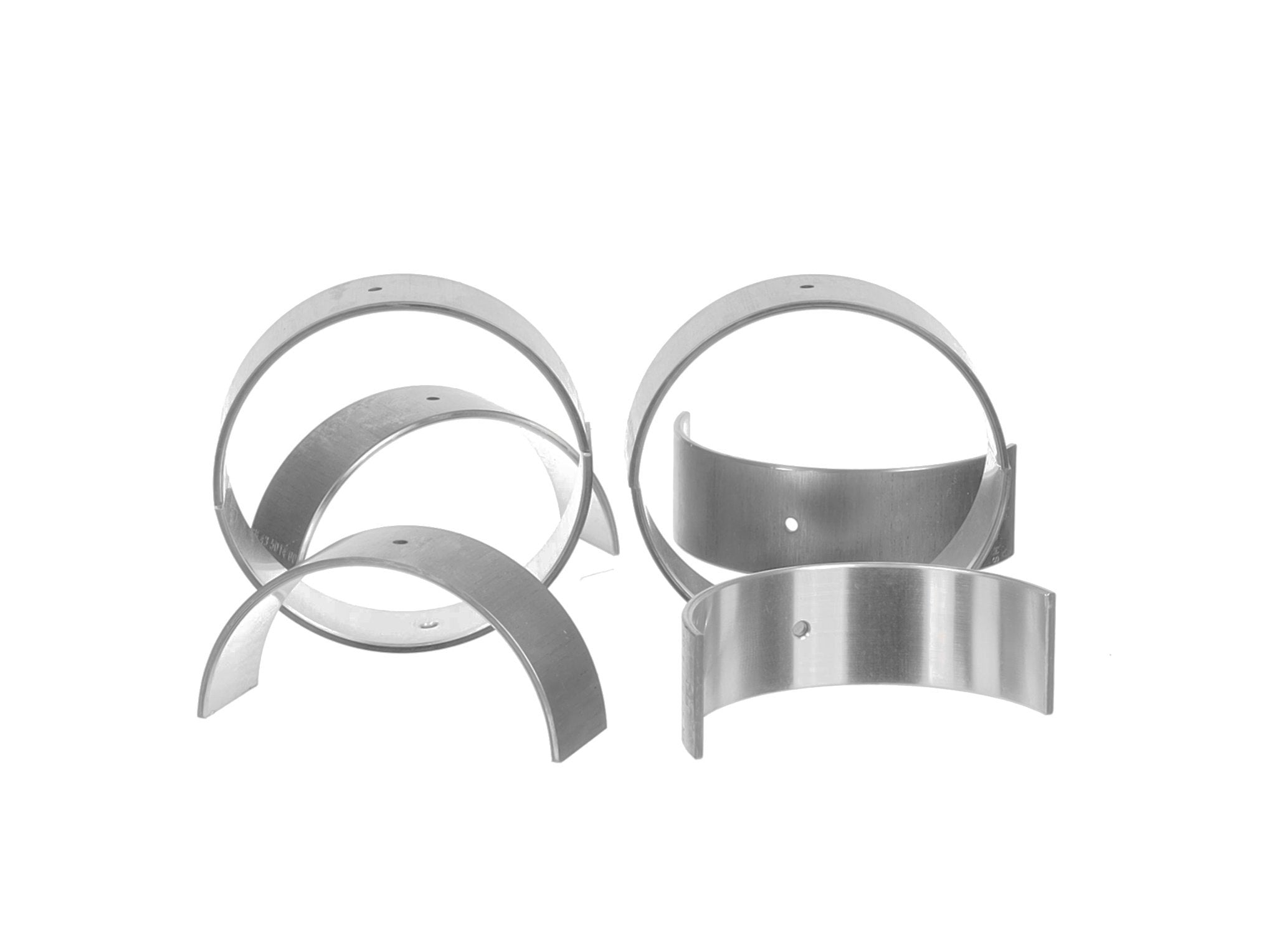
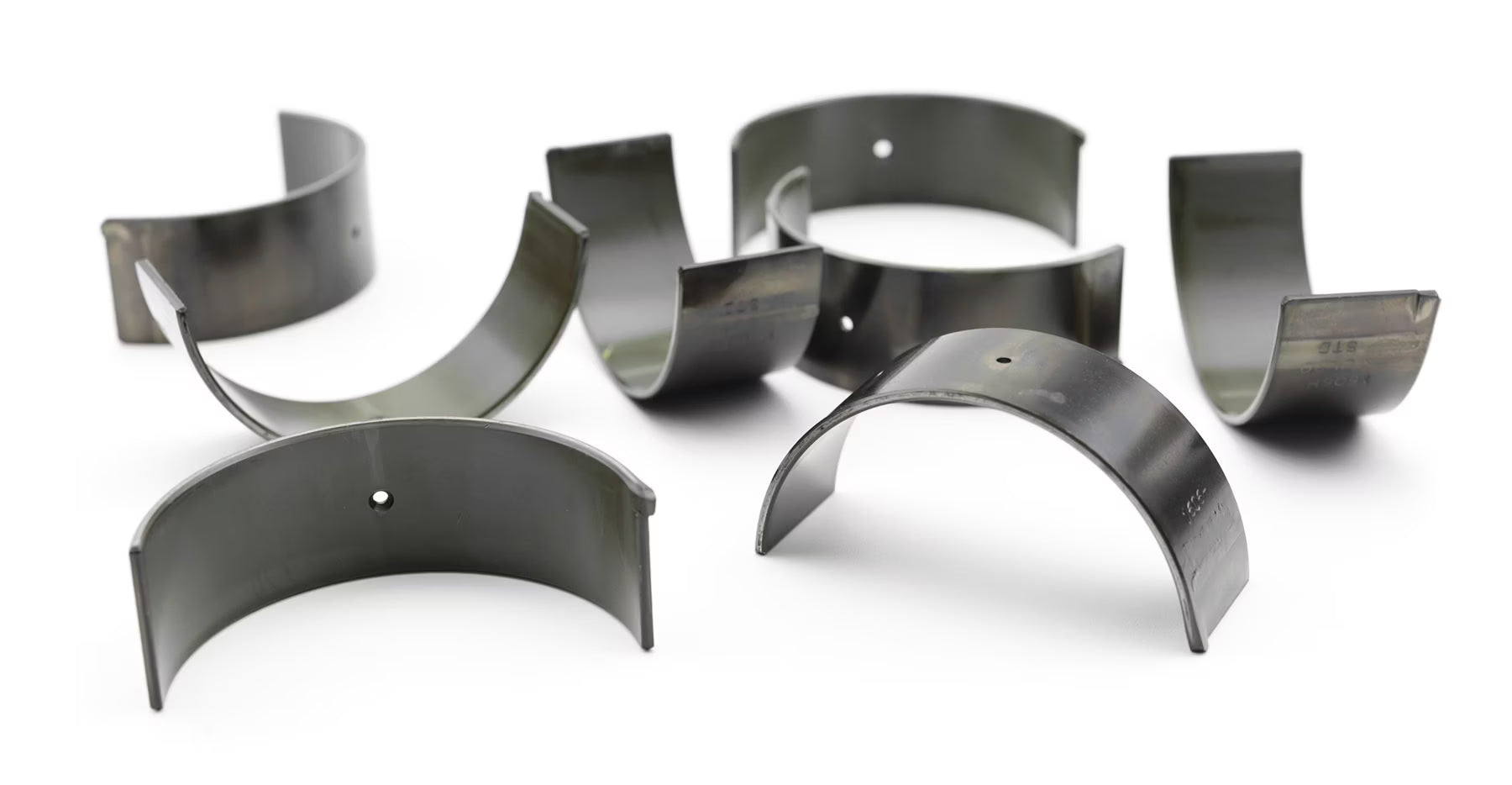
Rod bearings, also called big-end bearings, sit at the base of each connecting rod, cushioning the interface between the rod's big-end bore and the crankshaft journal during every firing event. CBT Auto Parts stocks OEM-quality engine rod bearings for diesel and petrol engines, machined to exact tolerances to ensure proper oil clearance.
Part of our Engine & Powertrain Parts range alongside connecting rods, crankshafts, main bearings, and engine rebuild kits, our rod bearing kits cover platforms including LS, Chevy 350, Ford 302, Honda H22A4, and K24A2. King connecting rod bearings are available for performance applications. Aftermarket big-end bearings here meet OEM specifications, and orders ship worldwide fast.
3 products
Showing 1 - 3 of 3 products
Why Rod Bearings Wear Faster Than Any Other Engine Bearing
Of all the bearings inside a running engine, rod bearings operate in the harshest conditions. Understanding why is important before choosing a replacement because it directly informs the specification you need.
At the moment a cylinder fires, the full force of combustion travels down the connecting rod and loads the big end bore against the crankshaft journal. This is not a gradual, steady load. It is an impulse a sharp, high-magnitude force that repeats with every firing event in every cylinder, thousands of times per minute at operating speed. Main bearings, by comparison, carry the rotational load of the crankshaft but do not experience this direct combustion impulse in the same way.
The practical result is accelerated overlay wear on the bearing surface, faster oil film breakdown under load, and a shorter effective service life compared to the main bearings in the same engine. In high-output or turbocharged applications where combustion pressures are elevated beyond the factory design point, this wear progression moves even faster.
This is why the quality of the connecting rod bearings fitted to an engine matters more than many builders initially expect. A bearing that holds its dimensional accuracy and surface integrity under repeated high-load impulses protects the crankshaft journal and the connecting rod big end. One that does not accelerates wear across both components simultaneously, turning what should have been a bearing replacement into a crankshaft regrind and a connecting rod inspection.
Bearing Shell Construction: What the Layers Inside Your Rod Bearing Actually Do
A rod bearing shell looks deceptively simple from the outside. The engineering inside the shell is what separates a bearing that holds up from one that fails before its time. Two primary construction types are found in quality engine rod bearings:
Bi-Metal Rod Bearings
Bi-metal bearings are built from two bonded layers: a steel backing for dimensional stability and structural strength, with an aluminium alloy running surface bonded directly to it. Key characteristics include:
- Excellent fatigue resistance within the load range of a standard or mildly modified engine
- Good thermal conductivity, which helps dissipate heat from the journal surface during operation
- The standard construction for OEM replacement connecting rod bearings across a broad range of diesel and petrol platforms
- A cost-effective and reliable solution when the engine is being rebuilt to factory output levels
Bi-metal engine rod bearings are the correct specification for the majority of standard rebuilds, where the goal is returning the engine to its original operating parameters.
Tri-Metal Connecting Rod Bearings
Tri-metal bearings add a third layer, a thin overlay applied over the intermediate material to address the specific demands of high-stress and performance applications. The overlay serves two functions that bi-metal construction cannot replicate:
- Contaminant embeddability — The soft overlay layer absorbs fine metallic particles, dirt, and debris that inevitably circulate in engine oil. Rather than scoring the crankshaft journal, small particles are absorbed into the overlay surface and rendered harmless. This is especially valuable in rebuilt engines where residual debris may remain in oil galleries despite thorough cleaning.
- Run-in conformability — During the initial hours after an engine is assembled, minor surface irregularities between the bearing and journal work themselves out. The overlay layer accommodates this process without scoring either surface, protecting the crankshaft journal during the most vulnerable period of the rebuild.
King LS rod bearings and King's broader performance bearing range are the most widely referenced tri-metal rod bearings in performance engine building. Their dimensional consistency and overlay specification make them the default choice for builds where factory clearances are being tightened, or output is being increased beyond OEM rating.
Standard Size and Undersize Rod Bearings: Matching the Shell to the Journal
Selecting the correct size rod bearing is not optional. Fitting the wrong size produces either insufficient or excessive oil clearance, and either condition accelerates wear across the entire bottom end.
Standard size rod bearings are correct when the crankshaft rod journals are at their original factory diameter unmodified, within tolerance, and carrying no visible scoring or measurable taper or ovality.
Undersize big end bearings are required when the rod journals have been reground to remove wear or scoring. A reground journal has a smaller diameter than standard, and a thicker-walled undersize bearing shell restores the correct oil clearance. Common regrind increments are:
- 0.010" (0.25 mm) undersize
- 0.020" (0.50 mm) undersize
- 0.030" (0.75 mm) undersize
- 0.040" (1.00 mm) undersize
Before ordering, confirm the regrind specification with your machinist and match the undersize increment exactly. The rod bearing size and journal diameter are not interchangeable; a 0.020" undersize bearing on a 0.010" reground journal produces double the intended clearance.
Platforms We Stock: Rod Bearing Applications at CBT Auto Parts
The CBT Auto Parts rod bearing inventory is built around the engines encountered most often in workshop rebuilds and performance builds:
American Platforms
- LS rod bearings: OEM-spec and performance tri-metal options for the full GM LS engine family, one of the most widely built and modified V8 platforms globally
- King LS rod bearings: King's dedicated LS bearing specification, used across street performance and competition LS builds where tight oil clearances and high output are the norm
- Chevy 350 rod bearings: standard and undersize options for the 350 cubic inch small block Chevy, covering decades of engine production across passenger vehicles, trucks, and performance builds
- 302 rod bearings: OEM-spec and undersize connecting rod bearings for the Ford 302 Windsor, covering both classic and late-model Fox Body applications
Japanese Platforms
- H22A4 rod bearings: precision connecting rod bearings for Honda's H22A4 VTEC engine, frequently rebuilt in both standard and performance configurations
- K24A2 rod bearings: OEM-quality big end bearings for the Honda K24A2, a widely used engine across the Accord, CR-V, and Element platforms
- For any platform not listed here, contact CBT Auto Parts with your engine code and crankshaft specification. Our team cross-references fitment and clearance data before any order is confirmed and dispatched.
Three Stages of Rod Bearing Failure: Where Is Your Engine Right Now?
Rod bearing deterioration follows a consistent progression. Knowing which stage an engine is at determines whether the repair is a straightforward bearing replacement or a more involved bottom-end overhaul.
Stage One: Overlay Wear
This stage is silent. There are no audible symptoms, no oil pressure changes that trigger a warning light, and no noticeable difference in engine behaviour. The overlay layer is eroding gradually, and oil clearance is slowly increasing beyond specification. The only way to detect Stage One is direct measurement bearing inspection with a plastigage or micrometer check of the journal and bearing bore during a routine engine-down inspection.
The implication is important: an engine that feels fine and has no warning signs may already be in Stage One. Scheduled bearing replacement at manufacturer-recommended intervals or at every major engine rebuild exists specifically to address this.
Stage Two: Intermediate Layer Exposure
As the overlay layer is consumed, the intermediate material below it begins to contact the crankshaft journal. Oil pressure begins to drop measurably, particularly at idle when oil pump flow is at its lowest. A faint, low-frequency knock may become audible from the lower engine under light load or at hot idle. The engine remains driveable, but not for long. At this stage, bearing replacement without crankshaft damage is still achievable, but the window is closing.
Stage Three: Steel Backing Contact
Once the intermediate layer is gone, the steel backing of the rod bearing shell contacts the crankshaft journal directly. Oil pressure collapses. The knock becomes loud and load-dependent. Continued operation at this stage produces rapid journal scoring on the crankshaft, potential connecting rod distortion from the impact loading, and, if the engine is not shut down immediately, connecting rod failure. A repair that was a rod bearing kit at Stage One has become a crankshaft regrind, rod inspection, and full bottom-end rebuild by Stage Three.
What to Source Alongside Your Rod Bearings
Rod bearings share the same oil supply, the same operating environment, and the same service interval as several other components. Addressing the bearing without assessing what surrounds it is the most common way a rebuild returns to the workshop sooner than it should.
The components that must be evaluated alongside any rod bearing replacement include:
- Connecting Rods: The rod bearing shell seats inside the big end bore of the connecting rod. If the bore is out of round, worn beyond tolerance, or the rod shows any sign of twist or bending, a new bearing will not restore correct clearance. Connecting rod inspection is a mandatory step before any bearing is refitted.
- Crankshafts: The rod journal surface on the crankshaft must be measured for diameter, ovality, taper, and surface finish before selecting a bearing size. A journal that falls outside specification, even if it has not been reground, may require regrinding or crankshaft replacement before a new bearing will seat and wear correctly.
- Main Bearings: Main and rod bearings share the same engine oil circuit and typically reach the end of their service life within the same rebuild interval. Replacing rod bearings while leaving main bearings unchecked defeats the purpose of a rebuild intended to restore full service life. Main and rod bearing replacement together is the correct approach in any complete engine overhaul.
- Engine Rebuild Kits: A full rebuild kit consolidates the gasket sets, seals, and bearing components into a single order, removing the risk of a missing part when the engine is already apart and reducing the total number of separate orders needed to complete the job.
All of these are available through the Engine & Powertrain Parts range at CBT Auto Parts, so the full scope of your bottom-end rebuild can be sourced and dispatched together without sourcing individual items from multiple suppliers.