
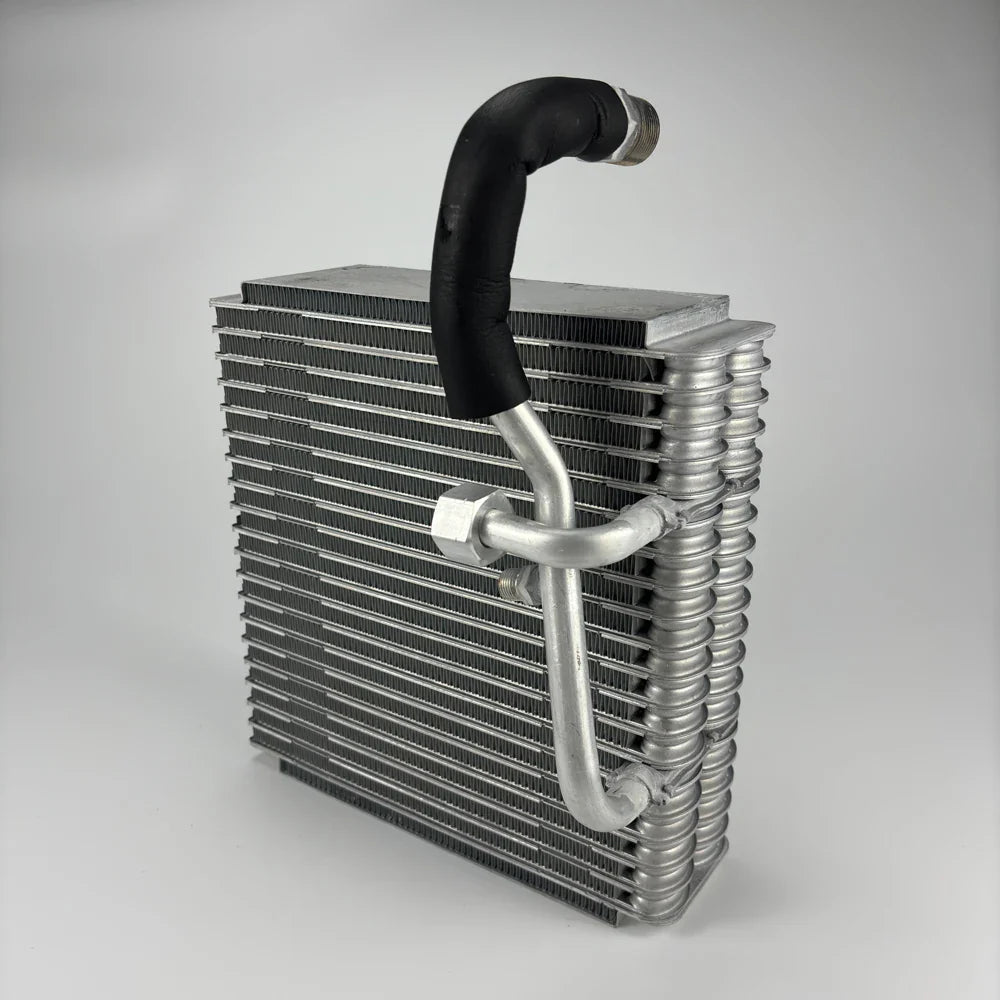
Car AC Condenser and Condenser Replacement Parts for Every Vehicle
An AC condenser is at the front of your vehicle and turns hot refrigerant gas back into liquid before it cycles through the rest of your air conditioning system. CBT Auto Parts stocks car AC condensers for sedans, SUVs, and trucks, sized to match factory cooling capacity.
Every condenser replacement here is OEM grade or built to OEM specification, so mounting points and fitting sizes match the original. Confirm fitment by year, make, and model, then add an evaporator or expansion valve from the wider Cooling, HVAC and Climate Control Parts range. Orders ship fast worldwide, with support on hand if you're unsure which condenser fits.

9 products
Showing 1 - 9 of 9 products
What an AC Condenser Does, and Why It Sits Up Front
An AC condenser works like a small radiator for your air conditioning system, taking hot, high-pressure air from the compressor and cooling it back into a liquid before it continues toward the evaporator. Because it needs maximum airflow to do that job, it almost always mounts at the very front of the vehicle, often directly ahead of the radiator, which makes it one of the most exposed parts in a front-end collision, routine stone and road debris impact.
Parallel Flow vs Serpentine Condenser Designs
Most condensers built since the late 1990s use a parallel flow, or microchannel, design, with microchanneling through many small flat tubes side by side rather than one long looping tube. This design dissipates heat more efficiently and uses less refrigerant overall, which is part of why modern AC systems run smaller refrigerant charges than older vehicles did. Older serpentine tube and fin condensers, still found on some classic and older commercial vehicles, use a single long tube that snakes back and forth across the core instead. The two aren't interchangeable even when the overall dimensions look similar, since the fitting style and internal flow path differ enough to affect how the system performs.
Signs Your AC Condenser Needs Replacing
A damaged or leaking condenser rarely fails quietly; a few signals point straight at it:
- Visible bent or crushed fins across the face of the unit, often from a rock or light impact rather than a full collision.
- Oily residue builds up on the build-up or surrounding bracket; refrigerant oil collects at a leak point over time.
- AC that cools fine at idle but loses performance at highway speed, sometimes the opposite of what you'd expect, and usually points to a flow restriction inside a partially blocked condenser.
Condenser Car Searches: What People Usually Mean
A condenser car search almost always means the same thing as an AC condenser, Dan ACvers describing the part by the vehicle it's going into rather than the refrigerant role it plays. It's worth knowing both phrasings land on the same listings here, since fitment is sorted by vehicle either way rather than by which words you used to search.
Condenser Replacement Cost: What Drives the Price
AC condenser replacement cost depends mainly on whether the unit is damaged alone or part of a larger front-end repair. A condenser hit hard enough to need replacing often takes the radiator support or fan shroud with it. Material and size matter too; larger SUV and truck condensers cost more than a compact sedan unit simply due to surface area. Labor stays fairly consistent across most vehicles, since the condenser bolts to the same front mounting points regardless of size.
Vehicle-Specific Condenser Searches: Hyundai, Mazda, Kia, Mini, and Nissan
A Hyundai ix35 co-Hyundai replacement and a Nissan Qashqai condenser replacement cost search both reflect how mounting brackets and refrigerant line routing differ enough between models that a universal part rarely works well. The same applies across a mazda cx 5 condenser replacement, a Mazda 3 condenser replacement, a Mazda 6 AC condenser replacement, and a Kia Rio AC condenser replacement, each sized and shaped around that specific model's front-end packaging. A Mini Cooper AC maintenance cost search often turns up a higher price relative to the car's size, since compact engine bays can mean tighter, more specialized mounting.
AC Condenser vs Radiator: Two Parts, One Front Mount Stack
An AC condenser and an AC radiator usually share the same front mounting structure, with the condenser sitting just ahead of the radiator to get first access to incoming airflow. The two are completely separate systems, refrigerant in the condenser and coolant in the radiator, but a hard enough front-end impact damages both at once. If you're replacing a condenser after a collision, it's worth inspecting the radiator immediately behind it before reassembling everything. Checking both at once after any front-end practice, regardless of which one shows obvious damage first.
What Pairs With Your AC Condenser
A new condenser is often replaced alongside the receiver drier or accumulator, since refrigerant oil and moisture contamination from a failed condenser usually travel through the system. If the evaporator or expansion valve shows signs of restriction too, addressing all three together avoids a repeat AC failure within the same season. A compressor that's run low on refrigerant for an extended period is also worth checking, since it can fail from the same root cause as a leaking condenser.
Ordering and Fitment
Listings here show year, make, and model coverage, including which trims or engine options share the same condenser where a vehicle offers more than one configuration. Most condensers ship within one business day, and a unit that doesn't fit is accepted for return without hassle. If your vehicle was in a collision and you're not sure how much of the front end needs to be replaced, our support team can help you figure out what's actually needed before you order more than necessary. Each condenser also ships with new O-ring fitting connections, so a missing seal never delays reassembly.


