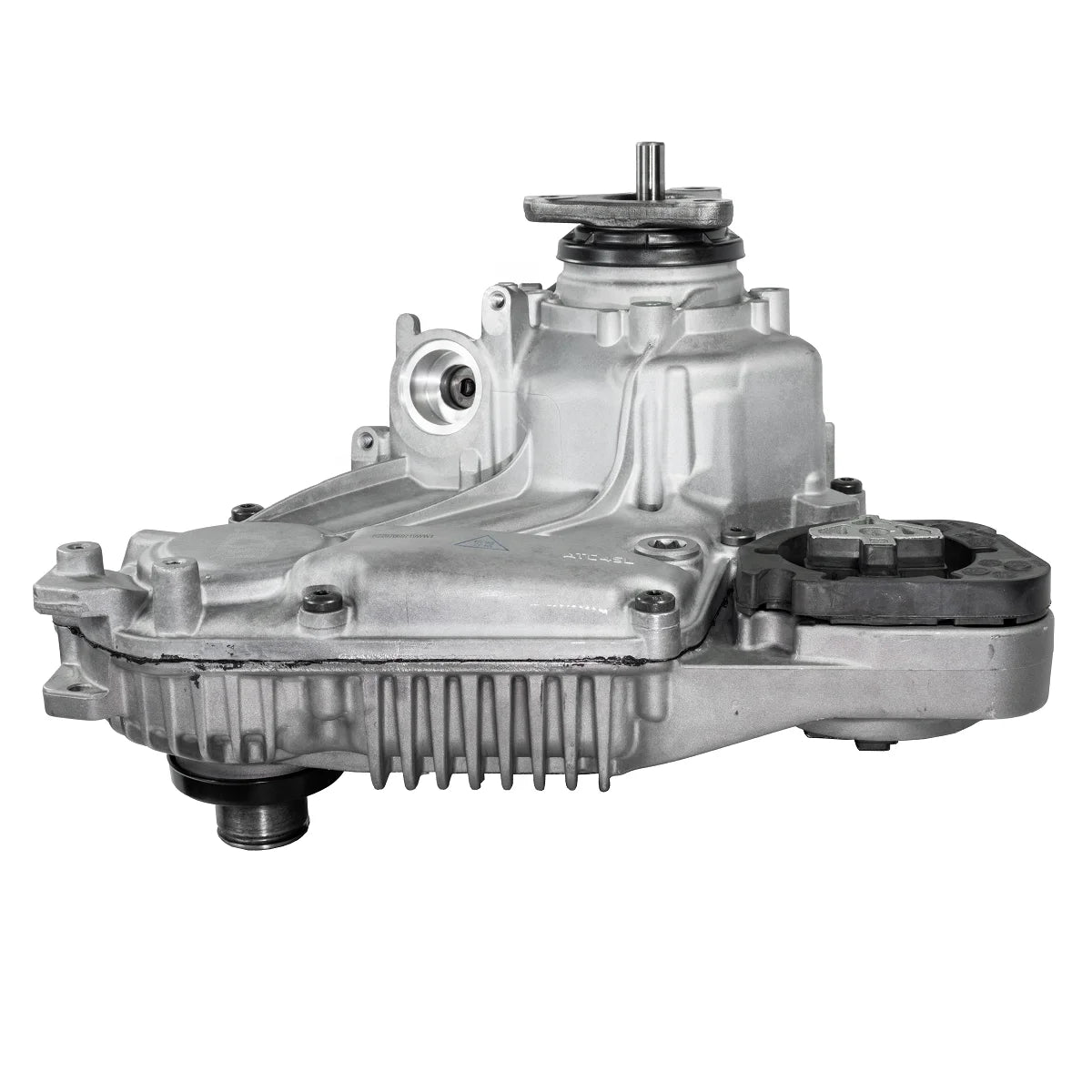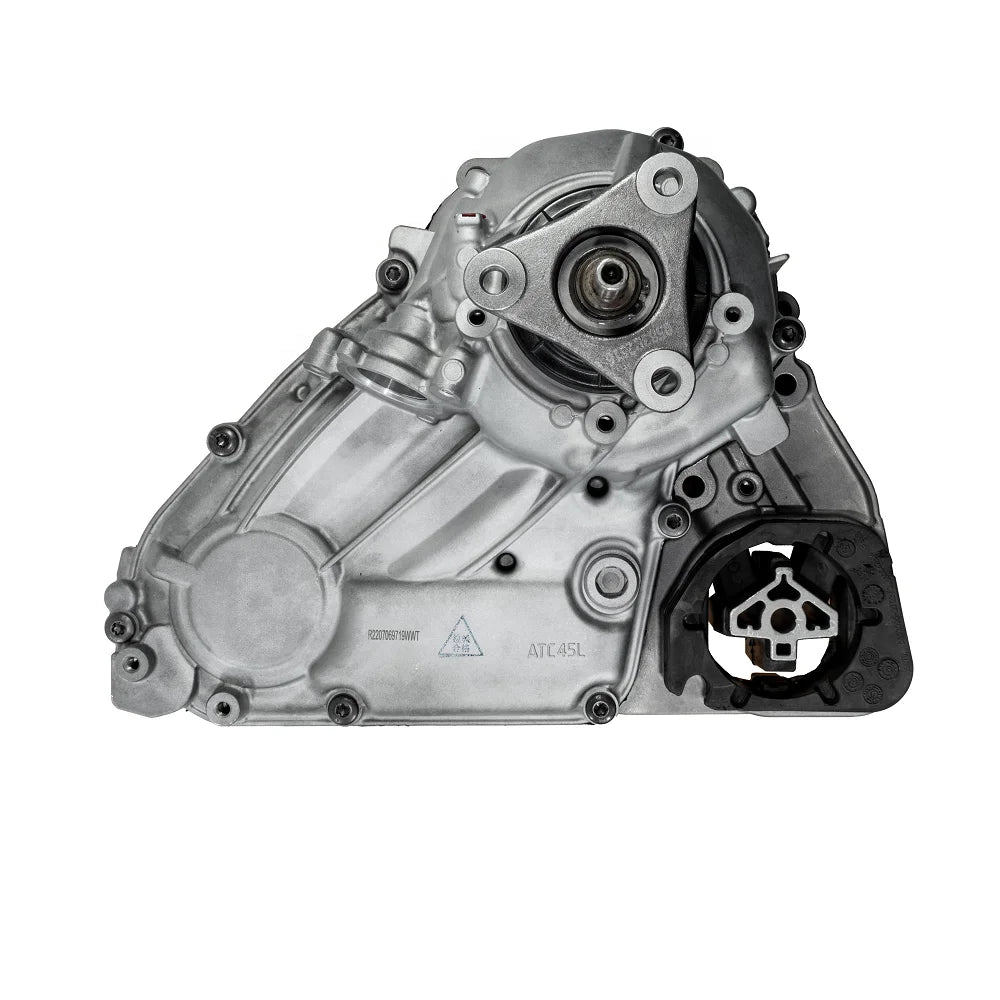
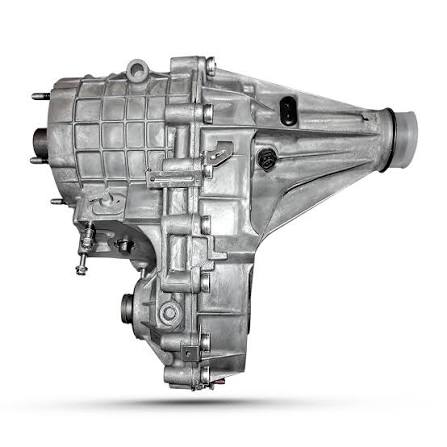
Transfer Cases: 4x4 Transfer Box Replacements, Rebuilds & Components for 4WD Vehicles
The transfer case is what separates a 4x4 from everything else. Sitting between the gearbox and the drivetrain, it is the unit that splits engine torque between the front and rear axles, engaging Four Wheel Drive on demand or maintaining permanent all-wheel distribution depending on your vehicle's design. When a transfer box fails, 4WD engagement is lost entirely, leaving a capable vehicle functioning as a two-wheel-drive platform at best.
CBT Auto Parts supplies 4x4 transfer case replacements and components as part of our Transmission and Drivetrain Parts range. Our stock covers Toyota 4x4, Suzuki Sierra, Mitsubishi Evo X, and Ford F150 platforms, among others; OEM-grade transfer cases for 4-wheel drive applications, dispatched from confirmed stock, delivered to both local and international destinations.

54 products
Showing 25 - 48 of 54 products
Understanding the Transfer Case and What It Does in a 4WD System
The transfer box does not simply switch drive between two- and four-wheel modes at the press of a button. It is a precision gearbox in its own right, one that manages speed relationships between front and rear driveshafts, provides a low-range gear reduction for off-road use in most configurations, and, in full-time 4WD systems, houses its own centre differential to manage the speed difference between front and rear axles during normal on-road driving.
A clear picture of how the transfer case fits into the drivetrain prevents the most common diagnostic mistake of attributing transfer case symptoms to the main gearbox, or vice versa.
Part-Time Transfer Cases
The part-time configuration is the most common design in traditional 4x4 working vehicles and recreational off-road platforms. In two-wheel-drive mode, drive goes to the rear axle only; the front driveshaft is disengaged. When four-wheel drive is selected, the transfer box rigidly connects front and rear driveshafts at a one-to-one ratio, locking them together so both axles rotate at the same speed. This configuration provides maximum traction on loose, slippery, or uneven surfaces but must not be used on hard sealed surfaces under load because the locked front-to-rear relationship generates binding through corners that places destructive stress on the transfer case output shaft, front driveshaft, and differential internals. A high-range and low-range gear set is typically integrated, with low range providing a fixed gear reduction that multiplies available torque for crawling applications.
Full-Time Transfer Cases
Full-time 4WD systems use a transfer box that incorporates a centre differential between the front and rear output shafts, allowing the two axles to rotate at different speeds during normal driving without generating drivetrain binding. This makes full-time 4WD suitable for mixed-surface driving without the on-road restrictions of part-time systems. The trade-off is that when a single axle loses traction entirely, the centre differential in the transfer box can send all available drive to the path of least resistance the spinning axle just as an open axle differential does. Most full-time systems address this with a centre differential lock that reintroduces the rigid connection when terrain demands it.
Active Transfer Cases
Modern all-wheel-drive passenger vehicles increasingly use electronically controlled active transfer cases that vary the torque split between front and rear axles continuously using multi-plate clutch packs governed by a control module responding to wheel speed sensors, steering angle, and throttle inputs. These systems deliver the traction benefits of 4WD without driver input, but they introduce electronic control complexity that makes diagnosis and replacement considerably more involved than a conventional mechanical transfer box. TCU compatibility and electronic calibration requirements must be confirmed before any active transfer case replacement is fitted.
How a Transfer Case Fails: Symptoms and Causes
Because the transfer box operates constantly in AWD vehicles and intermittently in part-time 4x4 systems, the failure profile differs between configurations. Part-time transfer cases that are rarely engaged can develop internal corrosion and synchroniser wear simply from prolonged disuse, while full-time units wear progressively under continuous load.
These are the symptoms that point specifically to transfer case deterioration:
- 4WD engagement failure: the most obvious indicator. The system fails to engage, engages and then immediately drops out, or engages with significant grinding. In mechanical selector systems, this points to wear in the shift fork mechanism or transfer case output shaft components. In electronic systems, the fault may originate in the actuator motor or the control module rather than the mechanical transfer box itself.
- Grinding or popping when engaging Four Wheel Drive: a healthy transfer box shifts between 2H and 4H modes smoothly with minimal resistance. Grinding during engagement indicates worn shift teeth, damaged synchronisers in the range section, or insufficient lubrication within the transfer case housing.
- Vibration under 4WD that is absent in 2WD: a transfer case with worn chain, damaged output bearings, or a degraded transfer case output shaft bearing transmits vibration into both driveshafts under 4WD load. The vibration is often absent or significantly reduced in 2WD because one output shaft is no longer under drive load.
- Fluid leaking from the transfer case housing or output shaft seals: transfer box lubricant loss accelerates internal component wear rapidly. The output shaft seals are the most common leak point, followed by the front and rear case gasket.
- Difficulty shifting into or out of low range: the range shift mechanism within the transfer box uses synchronisers in most modern applications and a simple dog-clutch arrangement in older designs. Both are subject to wear and require the correct vehicle speed and gearbox position to shift cleanly. Difficulty that was not previously present indicates internal component wear or lubricant breakdown.
- Transfer case warning light or 4WD indicator that flashes without stabilising: in electronically controlled systems, this signals that the transfer box control module has detected a fault in the clutch pack, actuator position, or output shaft speed sensor circuit.
Transfer Case Rebuild vs Full Replacement: Which Direction Makes More Sense?
This is the central question facing any 4x4 owner when a transfer box is confirmed as the fault source, and the answer is less straightforward than the equivalent question for a standard gearbox, because transfer case rebuild quality varies enormously between suppliers and the platform specificity of some units makes sourcing rebuilt components difficult.
Transfer case rebuild makes most sense where the external case, output shafts, and chain sprocket housings are physically undamaged, and the fault is confined to a known internal component: a worn drive chain, a failed output shaft bearing, a damaged shift fork, or degraded seals. A documented transfer case rebuild using quality internal components can restore the unit to full specification at a meaningful cost saving over a complete assembly replacement, provided the rebuild is performed to a traceable standard with confirmed component specification.
Full transfer case replacement is the correct direction where:
- The case itself is cracked or physically damaged beyond repair
- Internal gear damage has generated metal debris throughout the lubricant circuit
- The unit is an electronically controlled active transfer box where rebuilding the mechanical components without recalibrating the electronic system produces an incomplete repair.
- The platform has a cost-effective replacement unit available that makes a rebuild economically redundant.
CBT Auto Parts stocks both complete transfer case assemblies and supporting internal components for platforms where targeted component replacement is appropriate. Our 4x4 transfer case inventory is built around confirmed fitment, not generic descriptions.
Platform Coverage: Transfer Cases in the CBT Auto Parts Range
Our transfer box inventory is structured around the 4x4 platforms with the most consistent replacement and rebuild demand across both recreational and working vehicle applications:
- Toyota 4x4 transfer case: Toyota's part-time and full-time transfer cases span the HiLux, LandCruiser, Prado, and 4Runner platform families across multiple generation ranges. Both the mechanical selector units used in older HiLux generations and the electronically controlled units fitted to later LandCruiser and Prado applications are available in our range.
- Suzuki Sierra transfer case: the Suzuki Sierra transfer case is one of the most actively replaced units in the compact 4x4 market, driven by the platform's popularity in off-road recreational use across African, Australian, and Asian markets. The Sierra transfer box is a straightforward part-time mechanical design with well-documented rebuild paths and strong replacement parts availability. Buyers searching for a Suzuki Sierra transfer case for sale will find the unit available in our catalogue with confirmed fitment data.
- Evo X transfer case: the Mitsubishi Lancer Evolution X uses an Advanced Yaw Control rear transfer case integrated into its Super All Wheel Control drivetrain system. This is an electronically active unit that manages individual rear wheel torque vectoring rather than simply splitting drive between axles. Replacement of the Evo X transfer case requires electronic system compatibility confirmation and, in most markets, a dealer or specialist calibration procedure after fitment.
- 1979 Ford F150 4x4 transfer case: the first-generation F150 4x4 was fitted with either the Dana 20 or New Process 203 and 205 transfer cases depending on specification year and drivetrain option. These are purely mechanical part-time units with no electronic elements, making them highly rebuildable with the correct internal components. Buyers working on F-series restoration or fleet maintenance will find our range covers the most sought-after transfer box specifications for this generation.
- Transfer case output shaft: the output shaft is the single most stress-loaded component within any transfer box, carrying full drivetrain torque through the output yoke to the driveshaft. Spline wear, bearing journal wear, and seal surface degradation are the most common failure modes. We stock transfer case output shaft components for a range of platforms where the shaft alone, rather than a complete unit, is the required replacement.
- Transfer Case Maintenance: What Gets Overlooked Until It Fails
The transfer case is one of the most consistently neglected drivetrain components in routine vehicle maintenance schedules, and that neglect is the primary reason so many units reach early failure that a correct fluid service interval would have prevented.
Key maintenance considerations that apply directly to transfer case service life:
- Fluid change interval: transfer box lubricant degrades from heat cycling, moisture ingestion, and metal particle contamination over service life. Most manufacturers specify a transfer case fluid change interval that is significantly shorter than owners typically observe. On vehicles used for off-road driving, river crossings, or towing, that interval should be halved relative to the standard recommendation.
- Fluid specification: transfer cases are highly specification-sensitive. Active transfer cases with multi-plate clutch packs require dedicated transfer case fluid that meets the friction coefficient requirements of the internal clutch pack. Substituting standard gear oil in these applications destroys clutch pack friction material within a short period of operation.
- Output shaft seal inspection: the front and rear output shaft seals are the most common fluid loss point in any transfer box. A weeping seal that is caught early is a straightforward replacement; a seal that has been leaking unnoticed until the unit runs low on lubricant typically results in bearing and chain damage that requires a full transfer case rebuild or replacement.
For vehicles requiring broader drivetrain servicing alongside a transfer case replacement, our Transmission and Drivetrain Parts range covers differentials, driveshafts, and gearboxes, allowing a complete 4WD drivetrain restoration through a single supply source.