
Tie Rod Ends: Inner Tie Rod, Outer Tie Rod,d and Car Tie Rod Replacement Parts
Tie rod ends are the final link in your steering system, transmitting motion from the steering rack into precise directional change at each front wheel. A worn tie rod causes toe misalignment, uneven tyre wear, and steering that wanders on the highway, and the fault only worsens with time.
At CBT Auto Parts, we stock inner tie rod and outer tie rod options, including heavy-duty tie rod fitments for J-series and Land Cruiser 80 Series, part of our Suspension & Steering Parts range alongside Rack & Pinion Assemblies and Steering Knuckles. OEM and aftermarket are accepted, fitment is confirmed, and fast shipping keeps your repair on schedule.
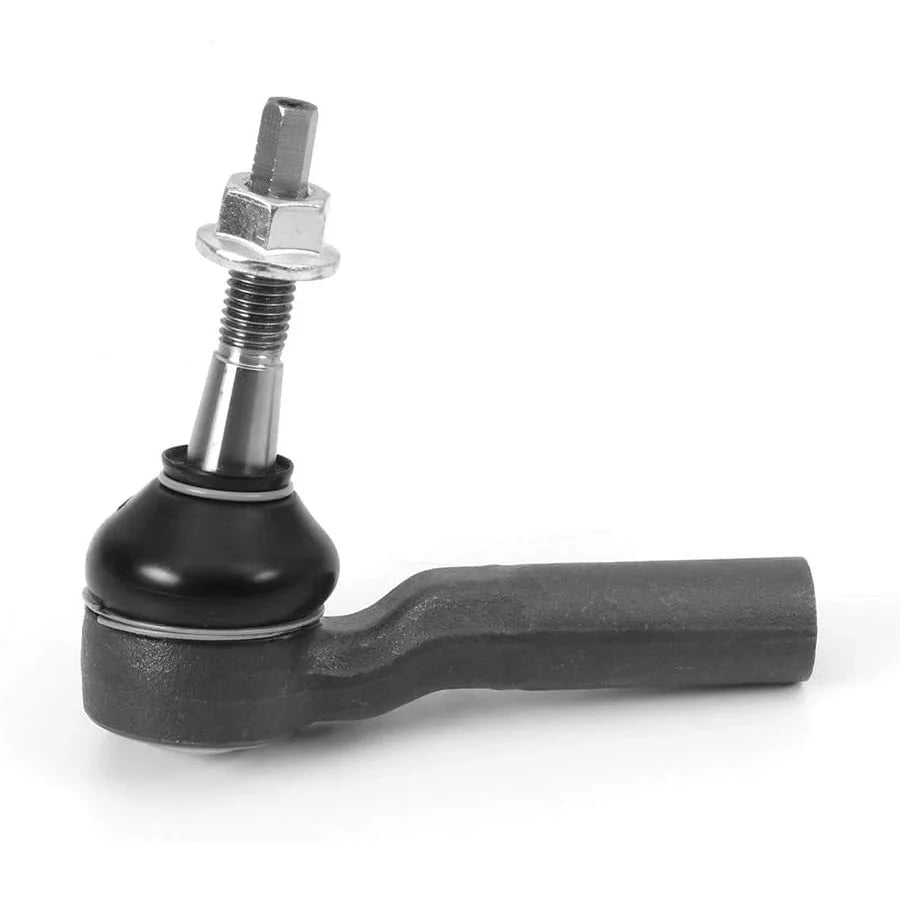
52 products
Showing 49 - 52 of 52 products
What Tie Rod Ends Do in Your Steering System
Every turn of your steering wheel travels through a defined mechanical path before it reaches the road. The tie rod end is the last link in that chain, taking the lateral motion generated upstream and converting it into the precise side-to-side movement that actually steers each front wheel. Because of this position at the very end of the steering linkage, a tie rod end has almost zero margin for play or slack before that looseness becomes noticeable to the driver.
A tie rod is not a single solid piece running the full distance. It is an assembly, made up of an inner section and an outer section joined through a threaded sleeve that also serves as the adjustment point for toe alignment. Wear in either half or in the threaded connection between them produces the same end result: a steering connection that feels vague or wanders rather than tracking precisely.
Tie Rod vs Tie Rod End: Clearing Up a Common Mix-Up
The terms tie rod and tie rod end are frequently used interchangeably, and in casual conversation, that rarely causes confusion. Technically, they refer to two different parts of the same assembly, and knowing which one you actually need prevents ordering the wrong component.
Inner Tie Rod
The inner tie rod, sometimes called the inner tie rod end, connects directly to the steering rack through a socket joint and sits closer to the centre of the vehicle, largely shielded behind the rack boot. It absorbs the initial motion handed off from the rack and tends to be replaced less often than its outer counterpart, since it operates in a more protected position with less direct exposure to road debris and moisture.
Outer Tie Rod End
The outer tie rod end is what most people mean when they search simply for a tie rod end. It sits at the outer end of the assembly, connecting to the steering knuckle through a ball joint-style connection, and is the joint style that actually sets toe alignment through its threaded adjustment sleeve. Positioned closer to the wheel and more exposed to impact and grime, the outer tie rod end wears faster and accounts for the large majority of tie rod for a car replacements we supply.
Signs Your Tie Rod Ends Are Worn
Tie rod wear shows up first in handling and tyre condition rather than a single obvious fault. The following are the clearest indicators that replacement is due:
- Steering that feels loose, vague, or has a noticeable amount of play before the wheels respond.
- A clicking or rattling noise from the front end, particularly over rough roads or during turns.
- Uneven tyre wear concentrated on the inner or outer edge of the tread, pointing to toe alignment that has drifted out of specification.
- The steering wheel is vibrating or shuddering at speed.
- Visible play when the wheel is jacked off the ground, and the tie rod is grasped and moved by hand.
- The vehicle pulls slightly to one side, even on a flat, level road.
If two or more of these signs are present, both tie rod ends on the axle should be checked, since wear on one side often places extra strain on the other.
Why Tie Rod Replacement Always Requires a Wheel Alignment
This is the part of the tie rod replacement that gets skipped more often than it should. The outer tie rod end's threaded sleeve is precisely what sets toe alignment, meaning the moment it is removed and replaced, that setting is gone. A new tie rod end installed without a follow-up alignment will drive straight out of the workshop, already out of specification.
Skipping the alignment does not just risk handling feel. It accelerates tyre wear immediately, often consuming whatever was saved by skipping the alignment within a few thousand kilometres of driving. Whether the repair was completed in a workshop or independently, booking a wheel alignment right after fitting a new tie rod end, automobile tie rod assembly, or full tie rod for a car replacement is not optional. It is the step that makes the rest of the repair worth doing.
Heavy Duty Tie Rod Ends for Off-Road and Classic Builds
Standard passenger car tie rod ends are not built for the load and articulation that lifted 4WDs, off-road builds, and older heavy trucks place on the steering linkage. For these platforms, a heavy-duty tie rod is the correct specification rather than an optional upgrade.
Teraflex Heavy Duty Tie Rod
Teraflex is one of the most established names in Jeep off-road steering components, and the Teraflex heavy-duty tie rod is engineered specifically for lifted Jeeps running larger tyres and more aggressive articulation than a factory tie rod was ever designed to handle. Where a standard tie rod end would bend or fail under sustained off-road flex, the Teraflex unit is built with a larger diameter rod and reinforced ends to match.
Land Cruiser 80 Series Heavy Duty Tie Rod
The 80 Series Land Cruiser is a common platform for steering upgrades, given how frequently it is built for serious off-road touring with a GVM upgrade and larger tyres. An 80 series heavy-duty tie rod addresses a known weak point on lifted and loaded 80 Series builds, replacing the factory tie rod with a unit rated for the additional stress before it becomes a failure point on remote tracks.
Jeep Wrangler Heavy Duty Tie Rod
The Jeep Wrangler, across YJ, TJ, JK, and JL generations, is one of the highest-volume platforms for heavy-duty steering upgrades in our range. A Jeep Wrangler heavy-duty tie rod is an ideal fitment on any Wrangler running a significant lift and larger tyre package, where the additional leverage on the steering linkage makes factory-spec components a genuine liability rather than just a wear concern.
88-98 Chevy Heavy Duty Tie Rods
The 1988 to 1998 Chevy and GMC truck platform remains a popular base for classic and off-road builds, and 88 98 chevy heavy duty tie rods are a frequently requested upgrade for trucks running larger tyres or lift kits beyond what the factory steering linkage was specified for. Heavy-duty replacements for this are built to handle that additional load without the play that develops in worn factory units.
OEM vs Aftermarket Tie Rod Ends
OEM tie rod ends replicate the factory thread pitch, ball joint tolerance, and boot material precisely, the right choice for daily-driven vehicles at stock ride height, where unmodified steering feel and warranty compliance matter.
Aftermarket tie rod ends, including heavy-duty options for lifted and off-road platforms, are fully accepted and routinely outperform factory specifications under sustained load or articulation. For any vehicle running larger tyres, a lift kit, or regular off-road use, an aftermarket heavy-duty tie rod is frequently the appropriate choice rather than simply a more durable one. Auto tie rod assemblies sourced through CBT Auto Parts are matched to your specific vehicle and use case, whether that is factory-spec daily driving or a heavily modified build.


