
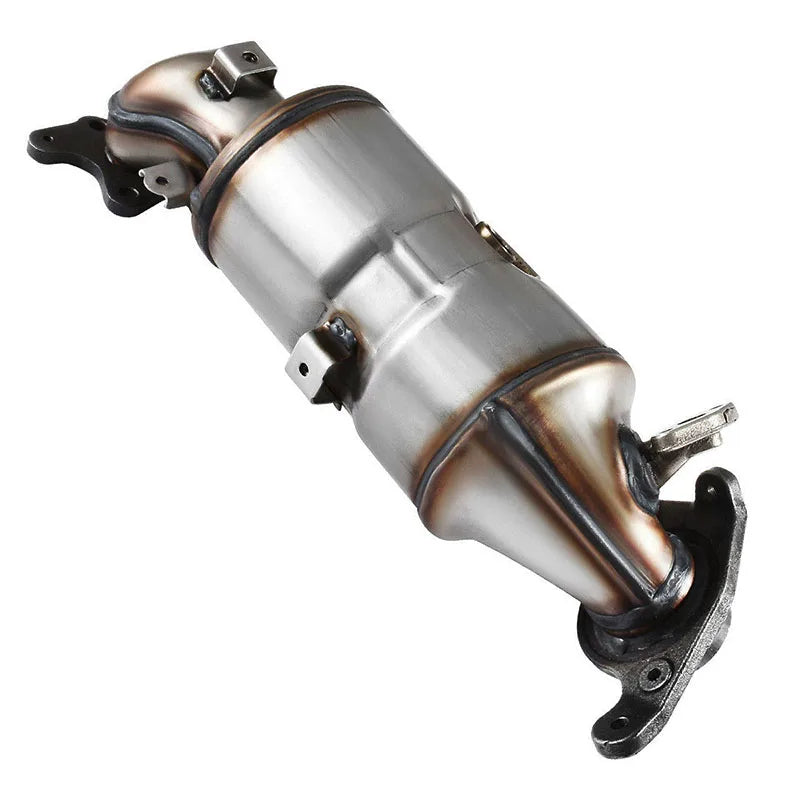
Catalytic Converters for Cleaner Exhaust Emissions
Catalytic converters play a key role in reducing harmful gases from vehicles. They clean the exhaust before it leaves the tailpipe. This process protects the air and supports safer driving. Every modern vehicle with an internal combustion engine depends on proper exhaust treatment to meet legal emission standards.
At CBT Auto Parts, we supply high quality catalytic converters for cars, trucks, and commercial vehicles. Our range includes high flow catalytic converters, emission control converters, OEM catalytic units, universal catalytic converters, and EPA compliant converters. We build each unit for long service life, strong pollutant reduction, and steady engine efficiency. Our products support safe driving and reliable performance under daily use.
45 products
Showing 1 - 24 of 45 products
What Do Catalytic Converters Do?
Catalytic converters sit inside the exhaust system of an internal combustion engine. When fuel burns inside the engine, it produces harmful gases. These gases include carbon monoxide, nitrogen oxides, and unburned fuel vapors. If released without treatment, these gases pollute the air and harm the environment.
Catalytic converters reduce these harmful gases through a controlled chemical reaction. They change dangerous gases into safer gases before they exit the vehicle. This process supports reducing emissions and helps vehicles meet strict emission standards.
Proper exhaust treatment also protects the emissions control system. When the system works correctly, the vehicle maintains full emission compliance during inspection tests. Without proper emission control, a vehicle may fail testing and require repairs.
How Catalytic Converters Work
Inside catalytic converters, manufacturers apply a special catalyst coating. When hot exhaust gases pass through this coating, it triggers a chemical reaction. This reaction changes harmful gases into carbon dioxide, water vapor, and nitrogen. These gases are much safer for the environment.
The outer housing is usually made from stainless steel. Stainless steel protects the unit from extreme heat and rust. This strong outer shell helps extend service life, especially in vehicles exposed to harsh road and weather conditions.
Maintaining correct backpressure balance is very important. If exhaust flow is too restricted, the engine works harder and may lose power. If restriction is too low, the engine may not operate at peak engine efficiency. High quality emission control converters maintain the right balance between exhaust flow and emission reduction.
High Flow, OEM, and Universal Options
OEM catalytic units match the original factory design layout of the vehicle. They meet factory emission standards and support normal daily driving. Many drivers choose OEM catalytic units when they want direct replacement with factory-level performance.
High flow catalytic converters allow smoother exhaust movement. They reduce restriction while still supporting emission reduction. When correctly installed, high flow catalytic converters may improve throttle response and maintain stable engine efficiency.
Universal catalytic converters provide flexible replacement options. They fit different exhaust systems when matched correctly to engine size, fuel type, and vehicle use. Selecting the correct unit depends on proper design layout, engine requirements, and compliance needs.
Emission Compliance and Legal Standards
Modern vehicles must follow strict emission standards. EPA compliant converters help vehicles stay within legal emission limits. They support full emission compliance during testing and inspection.
If the emissions control system fails, the vehicle may trigger a warning light, release strong exhaust odors, or produce higher pollutant levels. Replacing worn emission control converters restores proper exhaust treatment and supports effective pollutant reduction.
For customers in Australia, certain conditions may apply under the laws of Australia. By purchasing from our website, users may be agreeing to comply with and be bound by the following terms related to product use and vehicle compliance. Customers are responsible for ensuring parts meet local rules. Failure to follow local standards may result in penalties or a claim for damages where applicable.
All general information provided on this website is for reference only. Content reproduced in this website remains protected, and reproduction is prohibited without written approval. Any trademarks reproduced remain the property of their respective owners and are acknowledged on the website for identification purposes only. Our website may contain links to third-party sources for additional technical guidance.
Signs of a Failing Catalytic Converter
Catalytic converters can wear out over time. High engine heat, fuel problems, or mechanical faults can damage the internal structure. When this happens, exhaust treatment becomes less effective.
Common signs include reduced engine power, slow throttle response, rattling noise under the vehicle, and lower fuel efficiency. A failing unit may also cause the check engine light to turn on. In some cases, drivers notice a strong sulfur smell from the exhaust.
Internal blockage disrupts backpressure balance and reduces engine efficiency. If drivers ignore these signs, engine damage may occur. Replacing faulty catalytic converters restores proper exhaust flow and supports consistent emission control.
Built for Petrol and Diesel Engines
Different vehicles require different exhaust solutions. Passenger vehicles rely on catalytic converters for everyday emission control. Commercial trucks produce higher exhaust volume and require strong emission control converters designed for heavier use.
Diesel engines often operate under high load conditions. They depend on advanced exhaust treatment systems that support emission reduction during heavy duty operation. Our product range supports petrol vehicles, diesel engines, light commercial vehicles, and heavy-duty applications.
Each unit supports reliable engine efficiency, stable backpressure balance, and proper emission compliance across different vehicle types.
Importance of Backpressure Balance
Backpressure balance plays a key role in exhaust system performance. When exhaust gases flow at the correct rate, the engine operates smoothly. Proper balance helps maintain engine efficiency and reduces stress on engine components.
Too much restriction reduces power and increases fuel use. Too little restriction may affect combustion stability. Quality catalytic converters help maintain the correct balance while reducing emissions and supporting long-term reliability.
Stable exhaust flow improves overall emission control and ensures consistent pollutant reduction under daily driving conditions.
Why Choose CBT Auto Parts for Catalytic Converters?
CBT Auto Parts supplies reliable catalytic converters designed for durability and performance. Our range includes high flow catalytic converters, OEM catalytic units, universal catalytic converters, and EPA compliant converters built to meet strict emission standards.
Each product supports effective exhaust treatment, steady emission reduction, and strong engine efficiency. We focus on strong materials, accurate design layout, and dependable long-term use.
We help customers maintain full emission compliance while ensuring safe and efficient vehicle operation.


